This product may be covered by one or more trade secrets, and pending or issued patents and trademarks. For a listing of our registered intellectual property, See Bluestreak Patent Information..
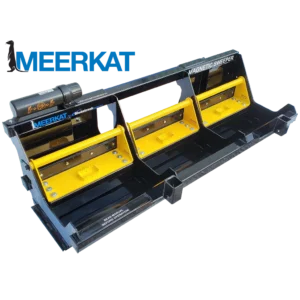
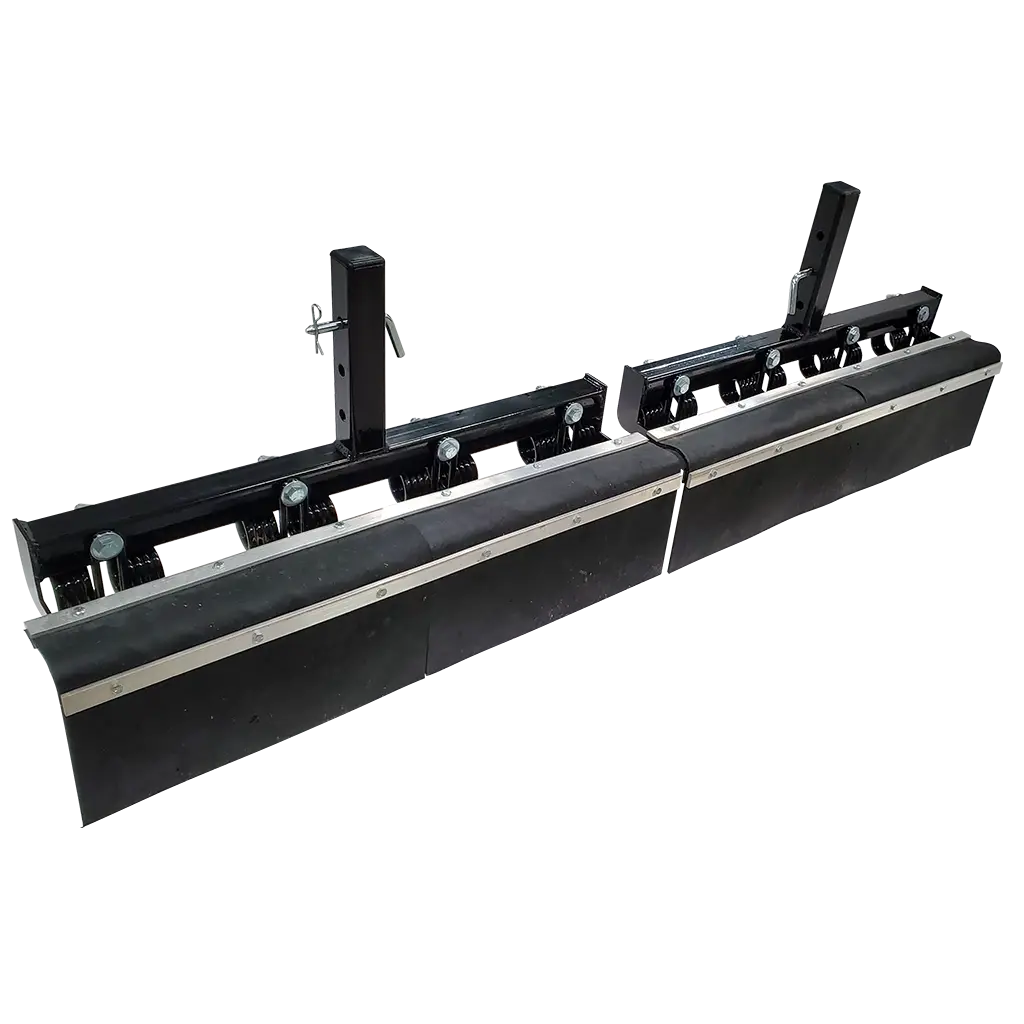
Utilize any skid steer to keep landfills, construction sites, precast concrete yards, mining sites, farms and other industrial sites clear of metal debris that can easily cause flat tires, personnel injuries, or product contamination. The Meerkat Front-Mounted Skid Steer Magnetic Sweeper can effectively collect debris at speed and over tough terrain thanks to the set of three 6.8” W x 5.25” H x 20.75” L swinging magnets and heavy duty construction.
The pivot points on these magnets have UHMW bushings which grant smooth action and a long wear life. By having these magnets on a pivot, the Meerkat can drop the collected debris using our gravity powered Swing-Out Clean-Off system that operates just like emptying a normal bucket.
The pivoting magnets stay stable while sweeping due to the magnets sticking to the steel frame when level.
The Swing-Out Clean-off allows an operator to take debris from the ground to a dumpster without assistance or having to handle the debris, increasing efficiency and safety.
Depending on the lift on your machine, the Meerkat can also empty into 8 foot scrap metal bins.
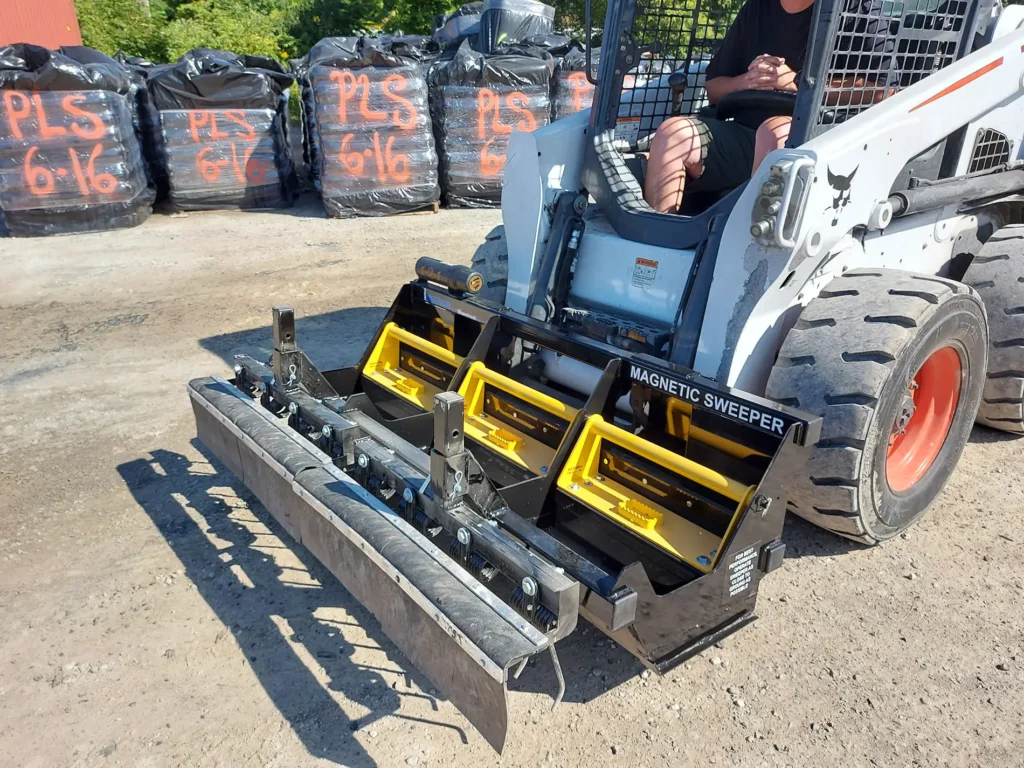
The Meerkat has the option to attach our Debris Digging Rake accessory which allows the operator to dig up debris that may be packed into the ground so it will be caught in the magnetic field. The DDR also grooms yards, and gravel / dirt roads and helps the operator see which areas have been swept already. If you have debris on the surface there is always more buried that can get pushed up over time and the DDR can help to pull that metal out of the ground for proper disposal.
With it’s simple operation, no maintenance requirements, and durability designed to stand up to any job site’s abuse; the Meerkat is an excellent option for cleaning up after construction, demolition, or industrial processes that create metal debris.
$11,659.99
See Pricing For All Models Below

$11,659.99
| Meerkat Series | Meerkat 67 |
|---|---|
| SKU | ME67 |
| Maximum Lifting Height | 10″ |
| Sweeper Weight | 737 lbs |
| Sweeper Width | 67″ |
| Sweeper Height Adjustment | Yes, continuous using lift arms of the skidsteer |
| Sweeper Wheel Type | N/A |
| Clean Off Method | Swing out clean off pivoting magnet system, gravity powered |
| Terrain Surface | All Terrain |
| Pricing Range | $$11,659.99 |
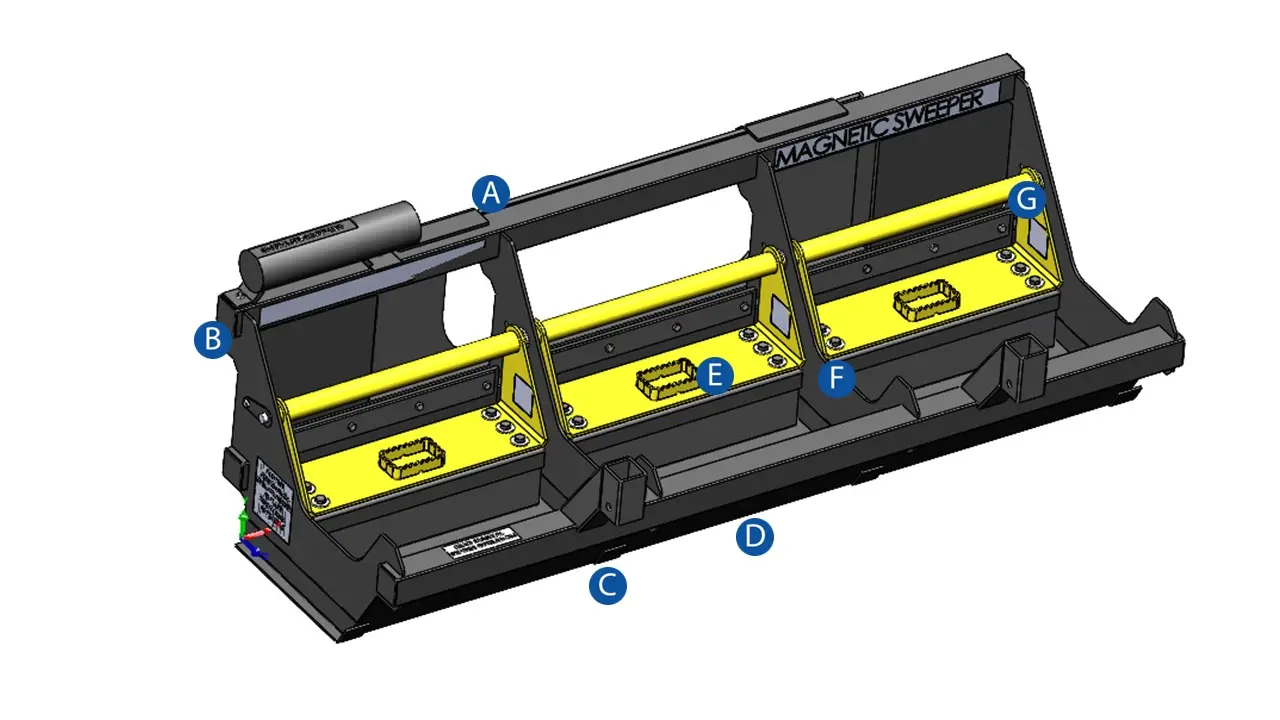
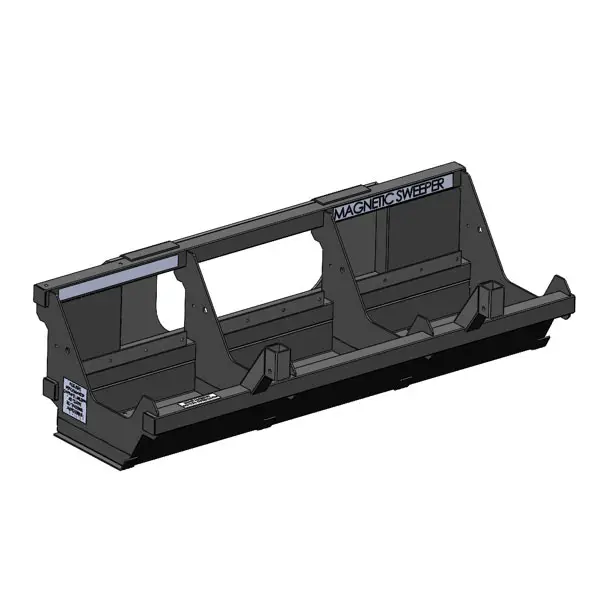
Meerkat Heavy Duty Construction
A: Reinforced skid steer attachment plate
B: 2.5” x 2.5” x 0.1875” (3/16”) wall steel frame tubes
C: 0.250” (1/4”) thick stainless steel wear plates 4 locations
D: 0.104” (12 gauge) thick 304 stainless steel bottom
E: Fully welded steel/stainless steel magnet assemblies
F: 0.25” (1/4”) thick steel frame ribs x4
G: UHMW pivot bushings
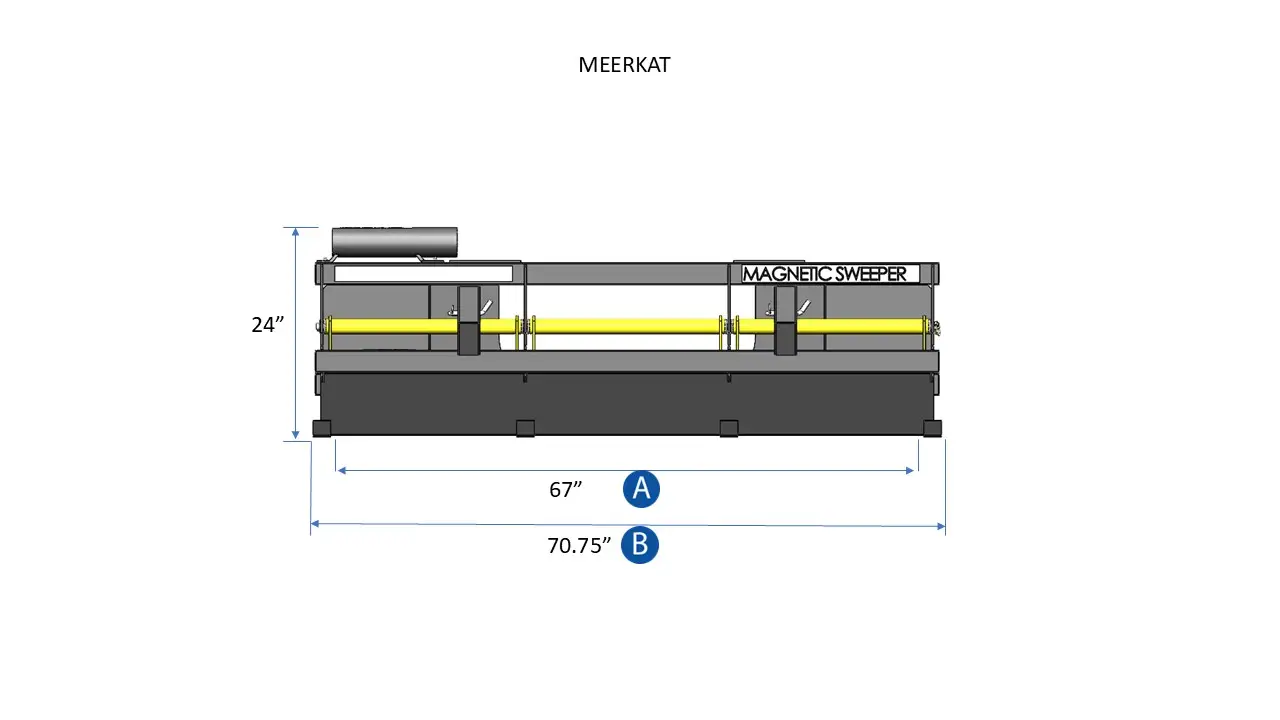
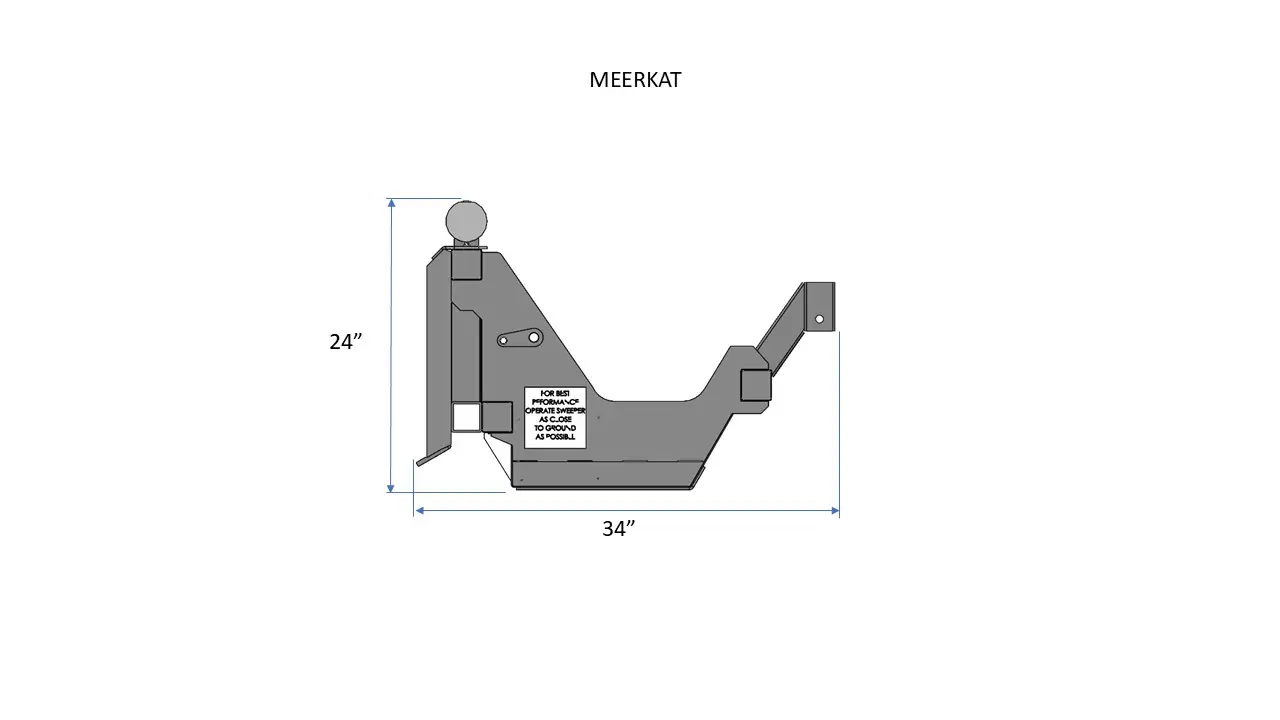
A: Magnet width
B: Total width
Meerkat Dimensions Back View
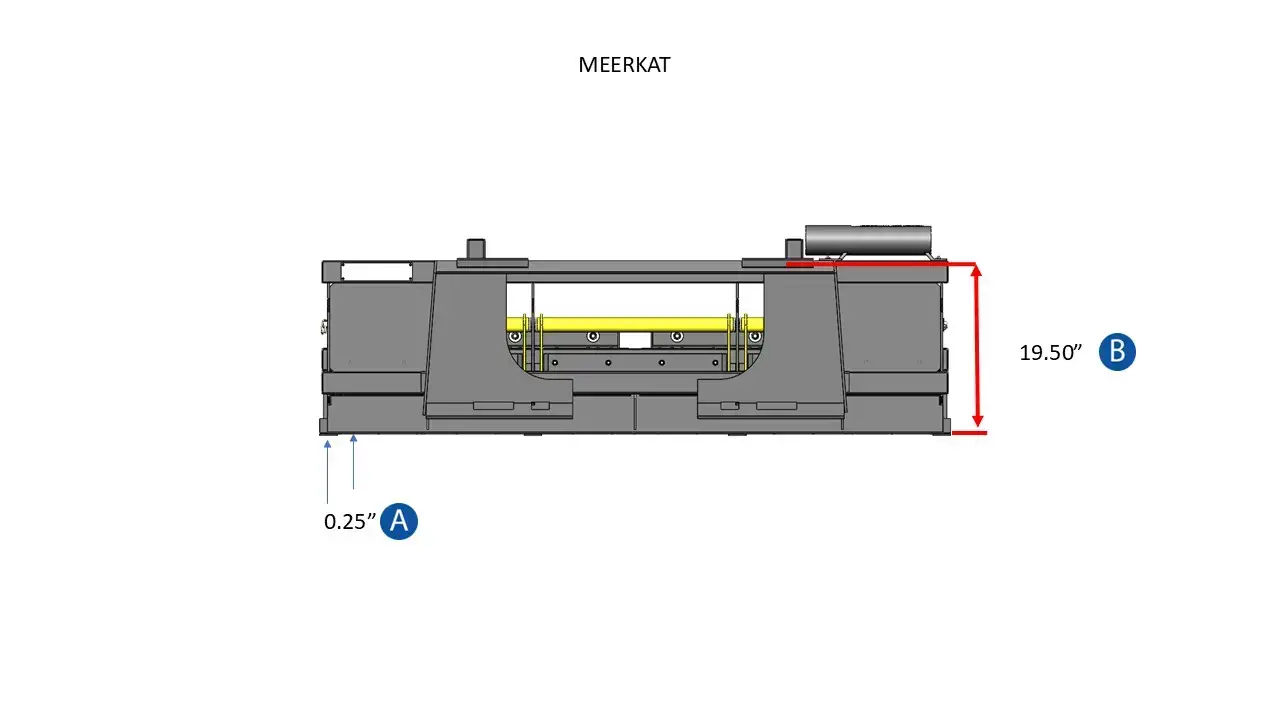
A: Step
B: Inside of connector plate to bottom of sweeper
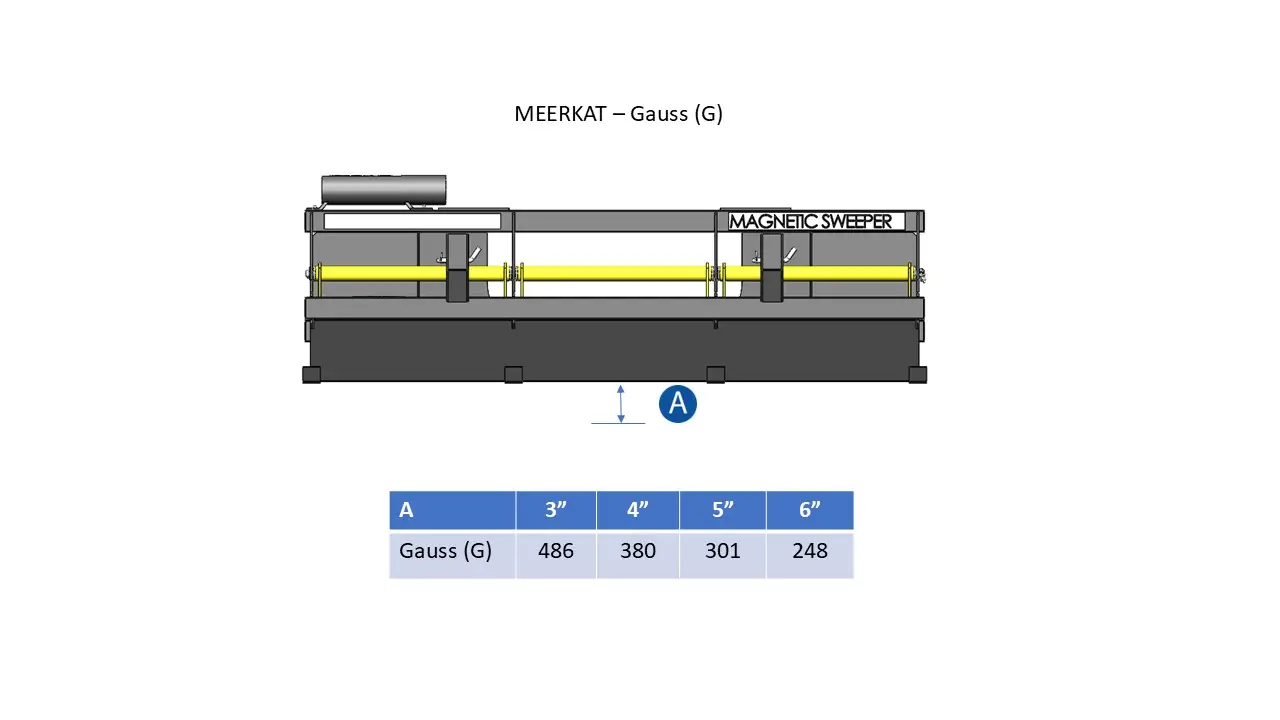
Meerkat Gauss Measurements
A: A = Distance from Magnet (Sweeping Height)
Note: Gauss (G) shown as the peak gauss measured in the center of the magnet at each distance.
Sorry, no reviews match your current selections
$718.10
$1,399.99
so this is the features video of the Meerkat Magnetic Sweeper. This unit is 67 inches wide and weighs 737 pounds, and as you can see, it’s got three swinging magnet assemblies here. Each of these weighs 120 pounds, and they’re six and a half by six and a half magnets, 20 inches wide. The reason it adds up to 67 is there is a small gap in the middle there, but that gap is to add strength with the rib that you can see, and the magnetic power is not really affected if you’re at our recommended operating width or operating height. When you’re at the right operating height, which we recommend around three inches, all debris will get picked up in that gap, but it’ll just gather onto the magnet assembly.
So we have on it right now our debris digging rake, which is an optional feature, and these are useful just for kicking debris up out of the ground if it’s kind of embedded. It actually works as a land groomer of sorts. The Meerkat is completely made out of steel and stainless steel. All the structural components are going to be steel, with the debris pan at the bottom being stainless, so it doesn’t interfere with the magnetic field.
It utilizes an 18-inch universal adapter plate, so you hook up to this thing the same way you hook up to any bucket or implement on a skid steer. The way it’s designed is with a zero degree lead-in, so to set it at the recommended operating height, all you have to do is just roll it back like you would tipping up a bucket and then drop your arms down to the lowest setting, and it’ll be at the right height.
All the bushings on these magnets are UHMW, so they will last a long time and they provide a nice smooth action when you’re swinging. We will bring it up to show you the wraparound feature and how to clean it off.
So we’ve got the Meerkat up in the air right now, and you can see the stainless steel debris pan. This thing’s going to last a long time; it’s really thick, and you can see the welds holding everything together. This thing’s fully welded construction, with some bolts just holding on the pivot points, and it’s really sturdily built. With the ribs in the middle providing a lot of strength, you can really run this thing into the ground, so you don’t really have to worry about adjusting it while you drive. If it bashes onto the ground, then that’s why we have this wraparound feature. The magnets come all the way to the back here, so as you can see, it’ll stick. I mean, it even magnetizes to the back—that’s how strong the magnets are on this thing. Each spot where there’s these little skid bars here, that’s a gap where the magnets aren’t, so I’ll show you the power of it. I’ve got a railroad spike here, and I’m going to put it in the middle. As you can see, I can’t really hold it; it’s just going to pull it to one side or the other. Even if I just toss it up there, it’s going to catch it. You see it just pulls it to the center of the magnet next to it, so these gaps aren’t really a factor in anything. They really just collect everything anyway, just because these magnets beside them are so powerful. If you’re at the recommended sweeping height, it’s just going to pull it either way; you’re not going to miss anything.
So there’s the wraparound feature. After all that, we’re going to show you how the unit unloads. This thing has no hydraulics, so it’s very simple—you don’t have to worry about hose maintenance or anything like that. It’s just as reliable as a bucket; you unload it the same way you dump a bucket. So I’ve got all the railroad spikes on there, and we’re going to show you how to unload. You just tip it like you would a bucket, and you can see the magnets swing away. As these magnets swing away, they disconnect from the debris pan at the back there, and that will separate the magnetic field from the debris, removing everything.
You can see how we set that to the right position—he just rolled it back and then dropped the arms all the way down and it’s at the right height. So we’re going to drive over these railway spikes, and you’ll see it picks them up.
[Music]
And again, we’ll do the clean off here—magnets swing away, everything falls off. So the Meerkat Magnetic Sweeper will dump off into, uh, it looks like an eight-foot bin I’ve used, general large scrap metal bits. On this model of Bobcat it lifts up high enough that you can get over it, but you might want to check how high your model will lift before trying this. So clean off is as easy as just dumping it into the bin if you need to.
So every one of these Meerkats will come with an operator’s manual, which is in that tube there, and this will give you all the instructions you need on how to set up the rakes, how to unload, how to hook up—everything you need.
[Music]
So he just rocks it back, drops it down, you’re back in business.

Magnetic sweeping and demonstration of the Meerkat’s features at a landfill
On site at the local landfill, this is the larger one in our area. So this is the area they use to unload a lot of construction materials. As you can see here, there’s a lot of pallets, a lot of crates, a lot of walls taken down.
So here we’ll operate this magnet in the recommended sweeping range of about three to six inches, and we’re just gonna make a couple passes around here and empty it off to see what it collects.
So we’re testing our new Meerkat skid steer magnet at a local landfill. This is the smaller version, or a smaller model when compared to the Ocelot Cat series. The Meerkat was designed more for rental use or smaller construction projects, or around a farm where you don’t need the hydraulic power of the Ocelot Cat.
So we have the optional debris rake attached to this one at the moment. You’ll see it’s doing a great job of just picking up anything that could be stuck in the ground. It has 67 inches of total sweeping width out of the 71 inches of the total product, and it weighs 737 pounds.
On the inside, it has three swinging magnet assemblies that are each six by six by twenty. So operating at about a three to six inch sweeping height, which is easily adjusted just by moving the arms of the skid steer like you would with any other bucket. But our maximum pickup height on the Meerkat is 10 inches. So when you’re in that three to six inch range, you’re pretty well off to collect any debris that’s on the ground.
You’ll see us now using it just to push some old shingle material out of the way using the rake. So not only is this collecting debris, really, the rake is a pretty big feature to both groom the land and kind of clear out anything that’s embedded into the dirt.
All right, so we got the magnet in the air now, and you’ll see the metal bands that indicate the separations in the swinging magnets, but you’ll see the amount of nails that we’ve collected is pretty astonishing. We’ve only been here for about 15 minutes sweeping.
And as always, with all of our sweepers, it has the wraparound feature, so anything that does hit the ground can just get caught on the back of the magnet.
So we’re going to take it over to the scrap metal bin and dump it off. We’re gonna try to dump it off in this lower bin here, and that should work, just like you would dump any other normal bucket. As you roll the bucket forward, or the sweeper forward, the internal magnets will swing forward as well.
So one of the things we thought of while we were designing this magnet is that it is an open top design rather than the enclosed version that the Ocelot Cat is. So what that means is rocks and debris will accumulate by those magnets, and as soon as you clean it out, there’s going to be nothing left. So gravity will keep this machine clean.
And then if you notice things like metal debris have somehow got inside of the magnet assembly itself, then it’s easy enough to just clean it off by swinging everything forward and pulling off the problem pieces.
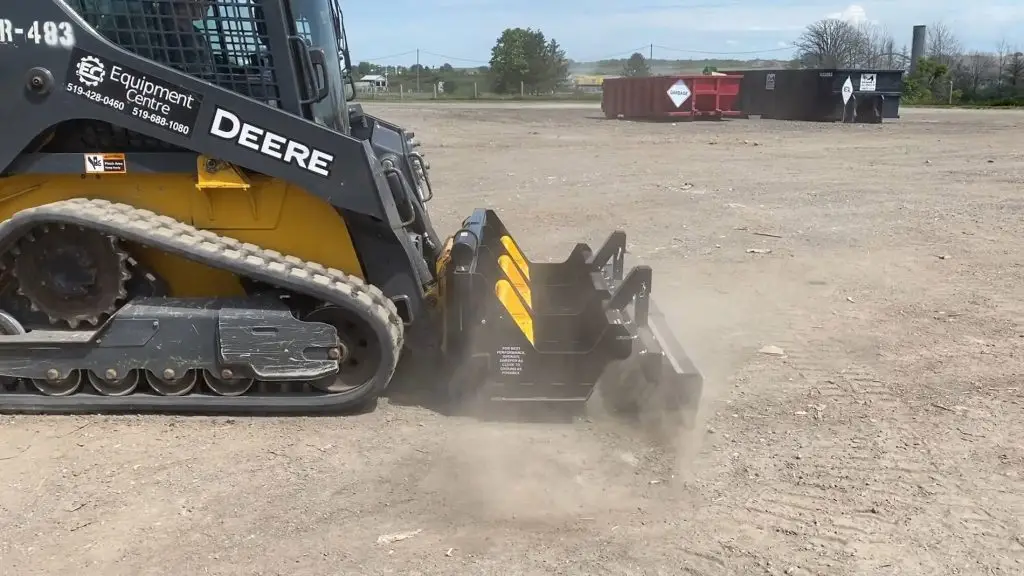
Ride along in a John Deere track loader using the Meerkat magnetic sweeper
So, it’s pretty easy to set this thing up. You just roll it all the way back, like you would a bucket, and then that’s close to the sweeping height you want.
Now, if you want to engage the debris-digging rakes, you just nose it down a bit. Then, once you see them compressed, you can drive around and employ the rakes.
So, like I was saying from the outside, the rakes do give you a pretty good indication of where you’ve been driving, so I’m just following the old tracks here. And, like I said, if I’m feeling it’s dragging a bit too much, it’s pretty easy just to bring it up and slightly disengage the rakes.
So, we’ll get into this section a little bit, and I can really feel those things digging. And then as I see terrain change, I just slightly adjust—bring it down a bit more so I’m still engaged, and then when I get to the bottom, bring it back up.
Now, these things are very heavy-duty, so I am babying it a little bit. This thing is made out of such strong steel, you can pretty much just run it into most things you’re going to find here, and it’s going to be all right. The spring teeth on the front are all 0.375 of an inch, so you’re likely not going to wreck anything unless you really attempt to. But the way we have it set up is that it does work pretty well just laying in its back position, like I just dropped it to.
So, we will include an instruction booklet—operating instruction booklet—with this, but for the most part, it’s pretty intuitive. You just roll it back to its rear position like you would, you know, a bucket, and then it’s pretty simple just to adjust the height as you’re moving. It’s a continuous adjustment, so you can keep it at the level you want it to be pretty easily.
So, we’re going to take it back over that scrap bin. I’ve gone around pretty much just the outside of this area once now, and we can see what I got.
Now, this is a less expensive and simpler version of our awesome cat—well, it’s not a different version, it’s a different approach to the same problem. So, the Meerkat’s really meant for someone—you’re not using it every day, but you maybe have a big problem area, or you’re doing large construction areas and you need to clear them quickly. This is very fast. Now, this might not be as fast as a trailer or something you can tow behind a truck, but it’s a lot more intuitive to cover ground with, because you’re not having to pack around all the time.
I mean, they have a little bit of concrete here, and I can even dig that up. Let’s get it over to this bin. This machine is just big enough that I can get in here easy, just like I’m dumping a normal bucket. Got a couple stragglers on there, but that’s no big deal.
All right, so we’ll bring that back. We’re ready to go back out.
The Meerkat Front-Mounted Skid Steer Magnetic Sweeper utilizes a gravity operated swing-out clean-off system which requires no hydraulics or electronics to operate, to clean the magnet off you simply tip the unit forward like you would when emptying a bucket which separates the metal debris from the magnetic field. The Meerkat can empty into 8-foot bins (pictured) if your model of track loader has enough lift. The Meerkat’s magnets will magnetize to the frame of the sweeper when in sweeping position so there is no swinging while the magnets are working.
Demonstration of Swing-Out debris clean-off system into a five foot dumpster at a landfill
All right, so here’s a halfway example of how the meerkat unloads. You can see on the back, the nails are going to debris about halfway down the sweeper, and in the front, that corresponds to these magnets being about halfway through their swing. So if he tips all the way forward, it’ll all come down.
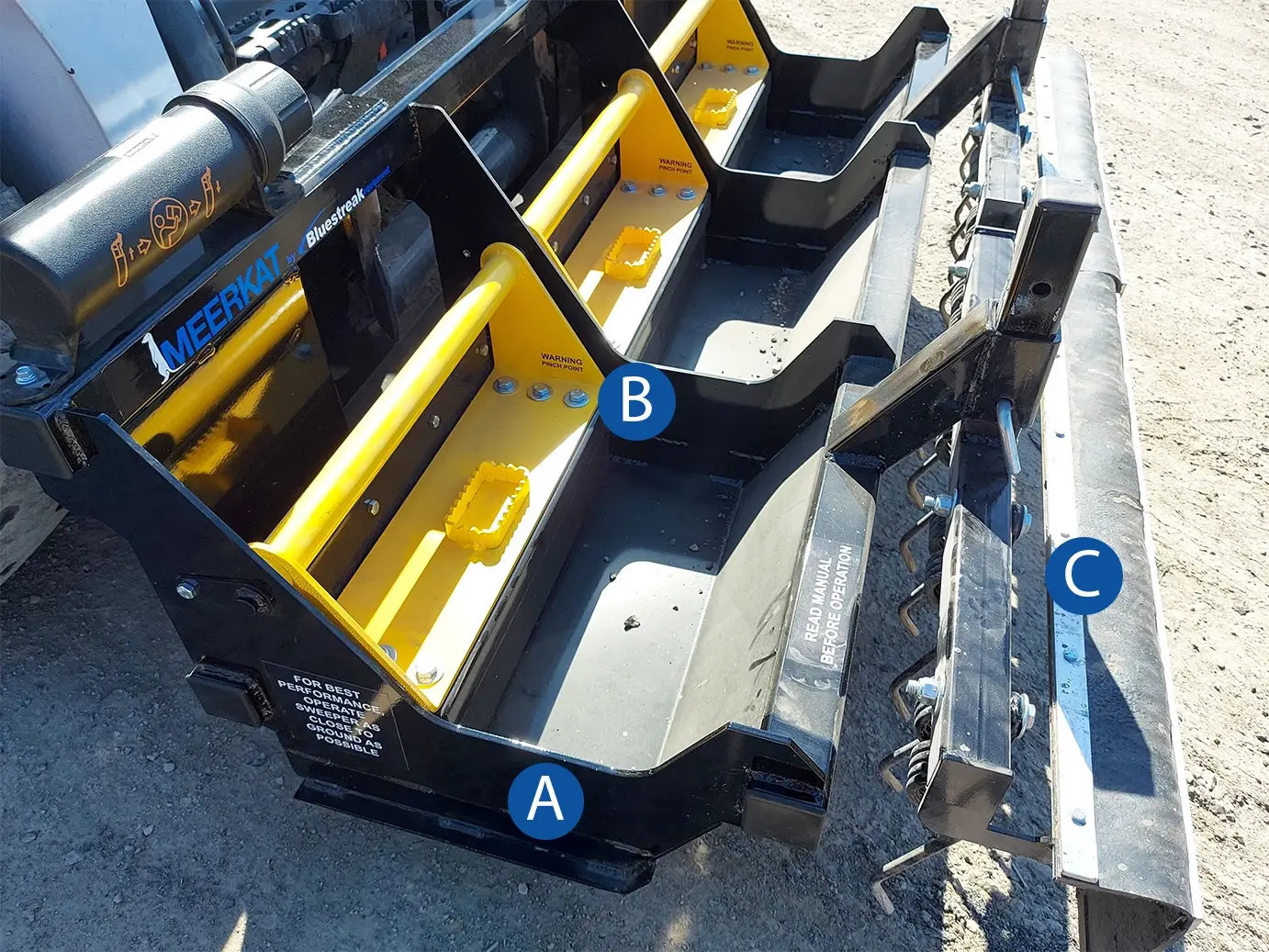
A: Welded heavy duty construction will stand up to extreme use conditions
B: Magnets pivot when the Meerkat is tipped like a bucket to separate debris from the magnet field
C: Separate magnet assemblies lower swinging mass and allow for reinforcement ribs
The Meerkat features a Universal Adaptor Plate connection with 0-degree lead in which allows for easy magnet positioning – you can hook up to it just like a bucket, roll the sweeper all the way back, then set the lift arms of the skid steer / track loader on their lower stops, which will position the Meerkat in the recommended sweeping height of 3” to 4” inches. Any adjustment from there can be done using the controls to set the magnet level or change the engagement of the optional Meerkat Debris Digging Rake
A: Wrap around function folds onto debris in the event of ground strikes
B: Stainless debris pan with skid bars to prevent damage to the magnet assembly
C: Universal adaptor plate with 0-degree lead in allows for easy positioning;
Connecting the Meerkat magnet to a skid-steer or track loader is the same procedure as mounting a bucket or any other non-powered attachment, latching into the adaptor plate and engaging the safeties is all that is required to start sweeping with the Meerkat. Making it easy to switch between other tools and back to the Meerkat without getting out of the cab and connecting hydraulic connections.
So this is a video to show the connection, how to hook up to a Meerkat magnetic sweeper.
This unit doesn’t have any hydraulics, so you hook up to it the same way you’d hook up to any bucket or other implement without hydraulics. Simply pick it up, and then we’re going to have to activate the safety locks, which I’ll do in a second.
So now the safety locks are engaged, and you can go ahead—once everything’s hooked up and engaged—and start sweeping with the Meerkat magnetic sweeper.
All right, so this is going to be a video of unloading the Meerkat magnetic sweeper. What we’ve done is disengaged the safeties on it, and then it’s as easy as unloading a regular bucket.
It’s got the 18-inch universal adapter plate on the back, so what he’s going to do is just set it down until the plate disengages. As you can see here, no hydraulics to mess around with—just as long as the safeties are disabled—and it’s easy to take off just like that.
A: Steel and stainless-steel construction protects magnet assemblies and prevents damage on ground strikes
B: Three 6.8” x 5.25” x 20.75” magnet assemblies, pivot when the unit is tipped down to release metal debris
C: Optional Debris Digging Rakes (DDR) with 3/8” spring-teeth and stone guards for loosening debris and grooming surfaces
This is the Meerkat maximum pickup height video.
We’ve got the Meerkat on blocks here set up at 10 inches off the ground.
We’ve got a two and a half inch nail, and we’ll slide it underneath the sweeper.
You can see it picked the nail up at 10 inches.
The designer of the Meerkat and Ocicat discusses the pros and cons of each sweeper to determine which magnet is best for a given application and scenario.
So we’re here with Brian, the designer of the Meerkat, and he’s going to walk you through his impressions of operating the Meerkat and its performance today and the other day we tested it at the landfill. This Meerkat magnetic sweeper we designed—this is a year after we developed the Ocicat sweeper that’s currently for sale on our website. The differences between the Meerkat and the Ocicat are: the Meerkat has a 67-inch sweeping width, the Ocicat has a 76-inch sweeping width, so it’s got a wider sweep to it. There are no serviceable parts needed on this Meerkat; there are no hydraulic cylinders or hoses. These magnets simply pivot on these UHMW pivot bushings, so there’s nothing that needs to be greased or maintained over time.
The Ocicat has a hydraulic cylinder inside of it—it’s all enclosed. With this one, the goal was to also develop something that still provided really high performance. This sweeper, if you were to lift it up off of the ground right now, it’s about three and a half inches—three inches off the ground. If you lift it up 11 inches off of the ground, about here—look at it in comparison. It will pick up nails from about 16 inches. So 15 inches versus 11. This still offers really good performance, though.
It’s designed with a standard skid steer plate on it, and it’s also designed in three sections for a few reasons. One is to limit the amount of swinging weight when these magnets swing out—they hit a rubber pad on the back when they come into position—but also, it allows us to have these steel ribs that are completely throughout the profile. So if you were to use this to push on something, or if you accidentally were pounding it into the ground—it’s extremely strong.
The Meerkat here also has magnets that are five inches thick by six inches wide. The Ocicat are six inches thick by eight inches wide, so they’re substantially larger. That’s how you get that 16-inch pickup height on it versus the 11-inch.
Okay, on this unit, would you recommend the Ocicat for someone who is having a constant issue or a, you know, a very severe problem that is continuous and happening all the time? Yeah, the only time you’d buy the Ocicat in place of this is if you had something where you’ve got a constant process that’s producing metal debris that you need to pick up—so like a commercial wood recycler, some type of wood recycler that’s got nails all the time coming out, or some type of industrial process that’s producing some metal debris all the time that constantly needs to be picked up. The Ocicat magnet is substantially larger at six and eight inches versus five and six inches.
So the Meerkat would be suitable for someone who’s generally using it as a service or just an occasional kind of cleanup? Yeah, that’s right. Usually, usually, the Meerkat—one thing about the difference between the Ocicat and Meerkat is the Meerkat, this debris digging rake, is an accessory, so it doesn’t come standard with the unit. You can buy just the base model itself without the DDR if you choose. On the Ocicat, the DDR is a standard part of the product.
Now, I’ll talk a bit about the DDR. This DDR is made out of 3/8-inch thick wire springs. These wire springs are meant for digging into this hard-packed surface. If you have metal debris on the top of your driveway like we’ve got some, it’s here. And on top, you’ve definitely got embedded within the surface. The teeth here will dig into the surface, and you can have them so they’re hung out about five inches below the bottom, and you can dig in about three inches that way by rolling your bucket downwards—get all that stuff out that’s below the surface too, not just on top.
But literally, if you were to pick up—if you had cases of three-inch bolts that were a foot by foot by six inches thick, it’d probably pick up three cases’ worth of those bolts all at one time. And we have another video on our site where we picked up the steel I-beam with that Meerkat. You can see the size of that BMW size 13 shoe. So picking it up on the edge makes a difference. Just—well, you’ve got most of your masses further from the magnet. If you pick it up this way, you’ve just got small contact points, whereas if you pick up this flange this way—nice, the fact that it will—
Not as much performance as the Ocicat, but there’s still a lot of performance to that magnet. There’s a lot of strength. A lot of strength.
What about the cute little guy on the logo?
Well, the cute little guy in the logo here was inspired by Bobcat’s nasty-looking cat here. It’s got these evil glasses on it. We wanted to go the other way, so we’ve got this cute little creature here. You see, he’s got nice little eyes.
These two videos will show the difference in power between the two skid steer magnets with an approximately 120 lbs I-Beam, note the Ocicat magnet pulls the beam off the ground without contact while the Meerkat needs to touch the beam in order to lift it. Therefore, the Ocicat is ideal for ultra heavy use situations while the Meerkat is best for general use and where hydraulic clean-off isn’t necessary.
So, we have a video on the site already, which I will link into this, uh, video of the Ocicat picking up this exact I-beam, which we brought from the shop. So we’re gonna see if the Meerkat can do the same thing, just to demonstrate the power difference between the Meerkat and the Ocicat, if there is one.
So we’re gonna unload this thing. With the Ocicat, we would do it with the hydraulics, but with the Meerkat all you have to do is just simply tip the bucket away. Gravity will disconnect—as you can see the magnets swinging, gravity pulls the magnets away, and that unloads anything you have on the ground on the magnet.
It can even get it sideways, so normally you need a lot of contact area, but this just goes to show the magnetic power of the Meerkat magnet.
Click through the debris types below to see the Meerkat Front-Mounted Skid steer Magnetic Sweeper’s performance with different types of metallic hazards
so this is a trial
so this is a demo of the Meerkat
magnetic sweeper picking up the 20 mil
steel abrasive balls used in vertimilling
and ball milling.
and this is set at a four inch sweeping
height and you can see we only missed—
so they’re all collected there at the
bottom of the magnet.
this thing, to unload it, is as easy as
just dumping it forward like a bucket.
so after we cleaned it off, we’re gonna
try it at speed and see how it does.
[Applause]
and these are notoriously hard to pick
up and it still got a pretty good
amount, so a couple passes over this
would clean it right up.
you can see they’re painted orange on
the ground here, and these are the ones
that it missed.
so we’ll try this with the Ocicat
magnetic sweeper at some point and see
what the difference is for magnetic
power.
The Debris Digging Rakes are an optional accessory on the Meerkat magnetic sweeper, the rakes are useful for dislodging debris that is stuck in the ground and grooming ground surfaces. The 3/8th” spring teeth loosen up heavily packed surfaces and the depth can be adjusted using different pin positions or by adjusting the pitch of the sweeper using the track loader’s hydraulics. In addition, the marks left by the Debris digging rake provide a visual indicator to the operator of which areas have been swept and which areas still need to be swept.
- No Surprise Border / Tariff Fees After Checkout
- Fast Shipping
- All Items in Stock
Secure Checkout
Fast Shipping
Easy Returns
Great machine, easy to use!