Lynx Magnetic Sweeper

Economical Front Mounted Magnetic Sweeper for Tractors and Skid Steers

Yard Cleanup Magnet Attachment for Tractors

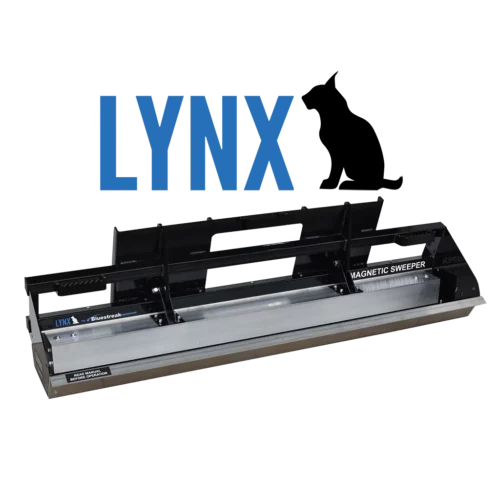
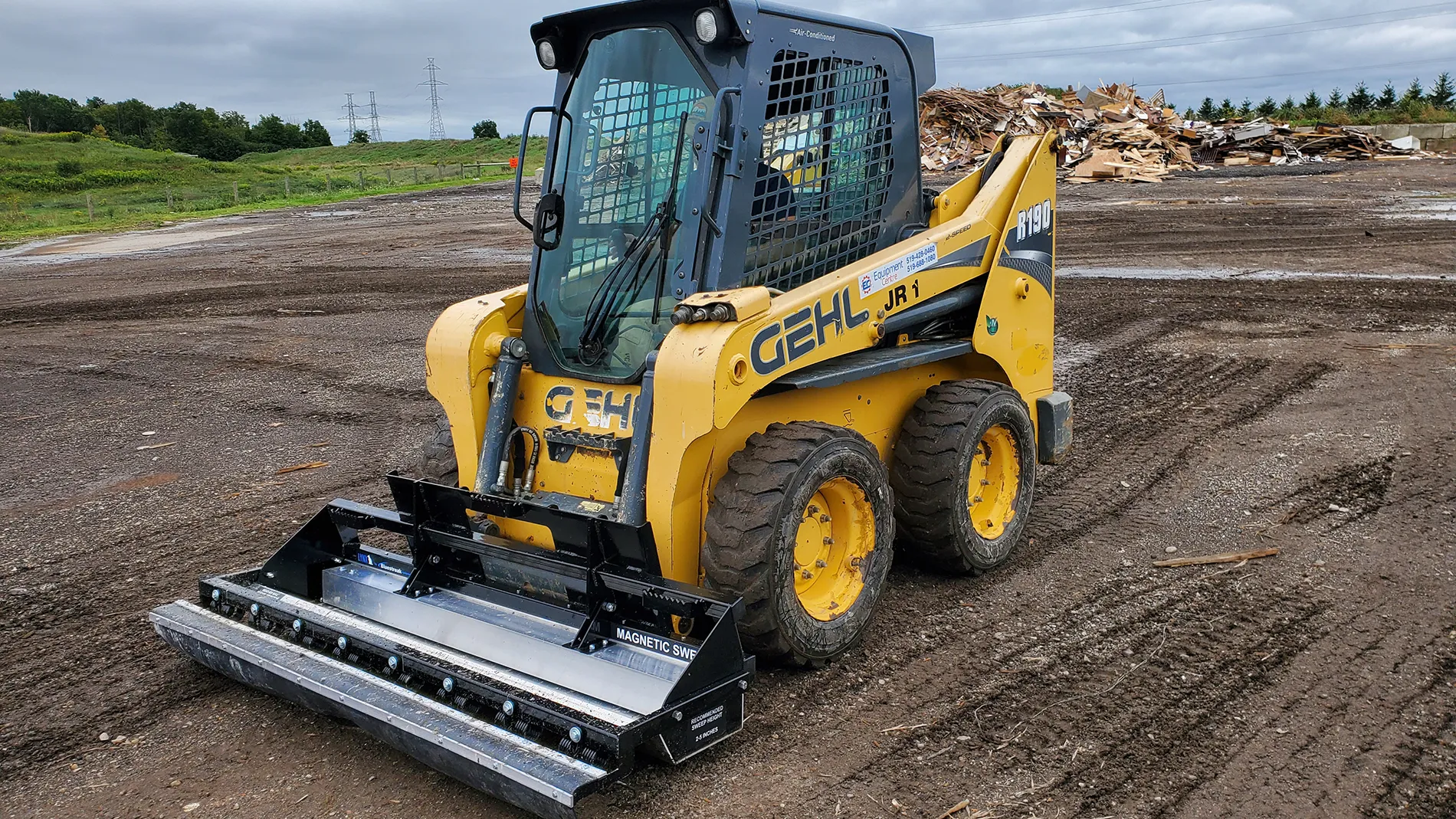
Lynx Front Mounted Magnetic Sweeper

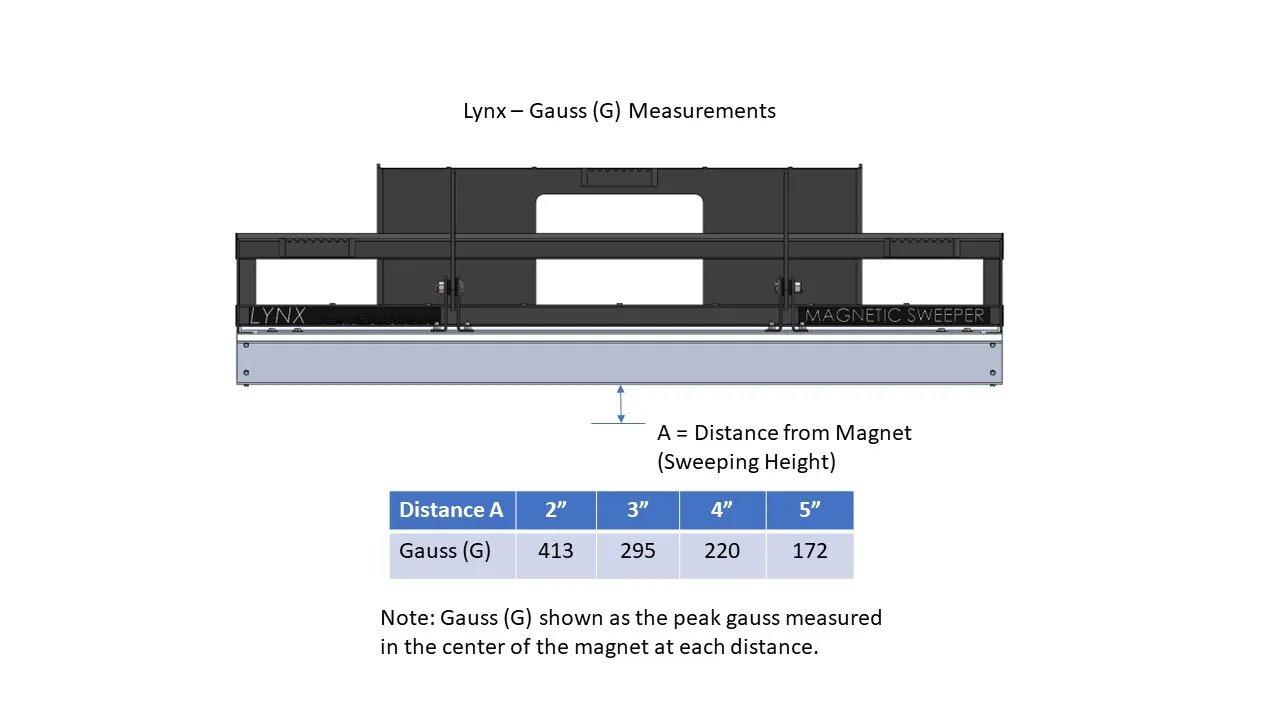
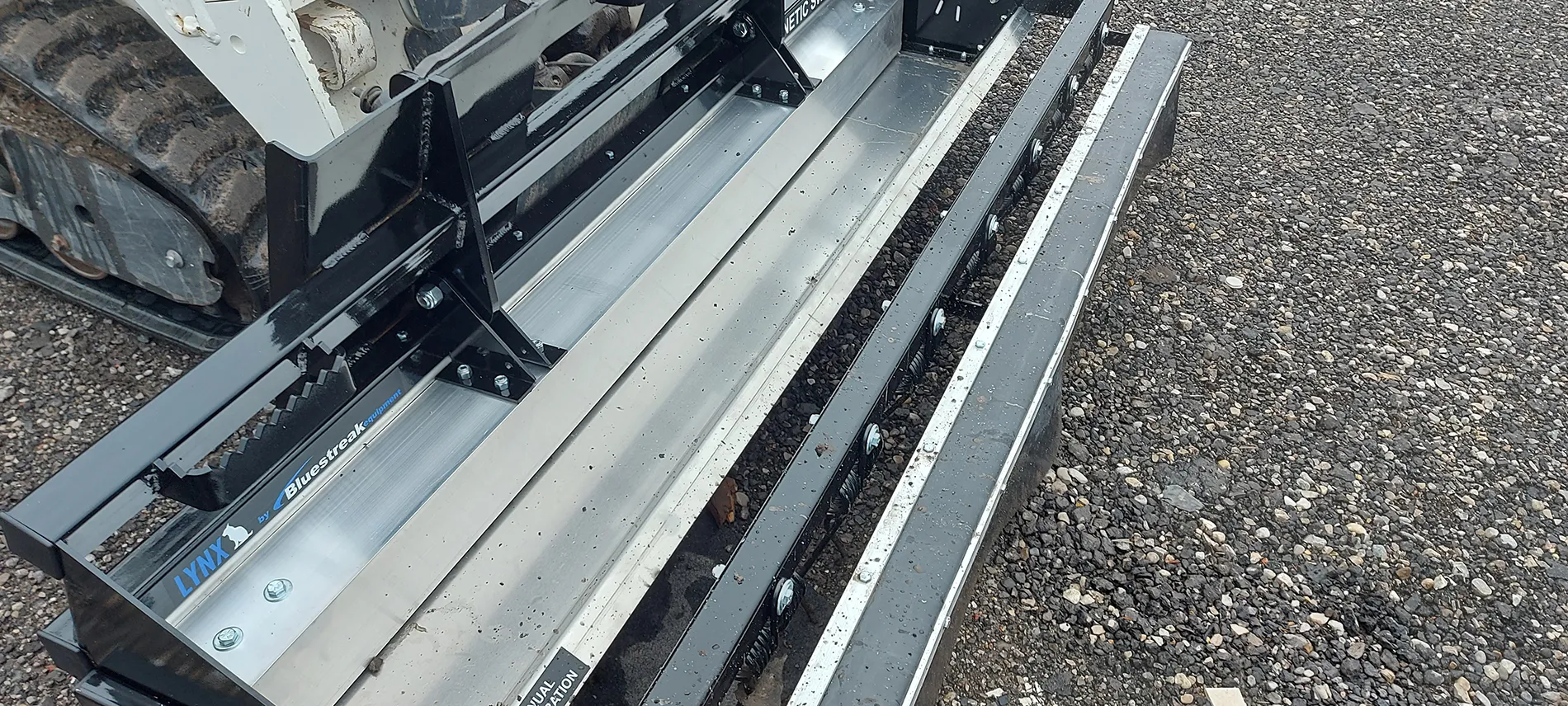
The Lynx Front Mounted Magnetic Sweeper uses a universal skid steer adaptor plate that allows it to be used on many types of equipment, weighing in at only 348 lbs means it can be used on any skid steer and many small tractors with loader arms and a universal skid steer attachment plate system. The Lynx magnetic sweeper uses a permanently charged 4.5” inch x 4.5” inch x 68″ inch ceramic magnet and can pick up a 2.5” inch nail from 8.5” inches off the ground which offers excellent pickup performance for most debris types in the recommended 2” inch to 5” inch operating range.

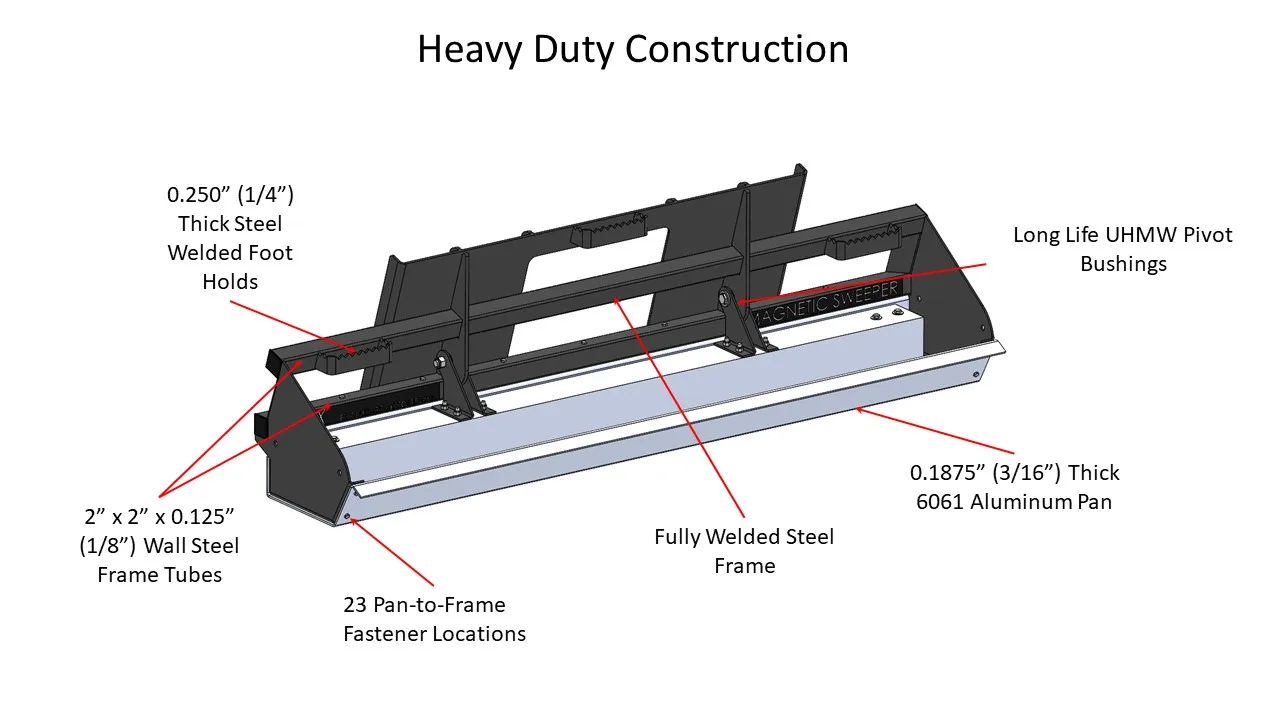
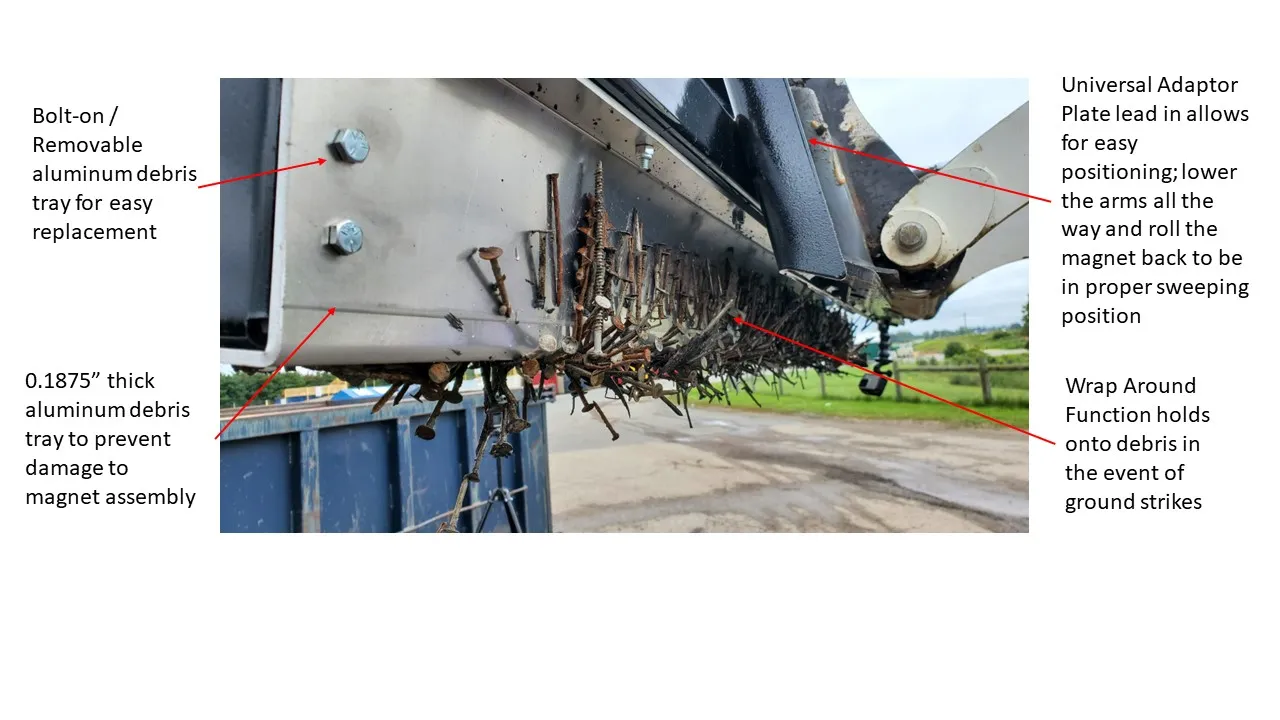
The Lynx has a durable 3/16” inch aluminum debris pan that resists damage and retains the collected debris even if the magnet hits the ground thanks to the wrap around function. Cleaning off the Lynx is as easy as emptying out a normal bucket, the magnet in the sweeper hangs on pivots with UHMW bushings and swings away from the back wall which releases all the debris from the magnet when the unit is tipped forward.

The optional Debris Digging Rake accessory extends the function of the Lynx magnet by loosening up debris that is stuck under the surface of the ground you are sweeping on, so it can be collected by the magnet. The Debris Digging rake also grooms whatever surface the Lynx is operating on and gives a clear visual indicator of where you’ve swept already.

$4,849.99

See Pricing For All Models Below

Lynx Magnetic Sweeper

Pricing

 Lynx 68 magnetic sweeper
Lynx 68 magnetic sweeper
SKU: LY68
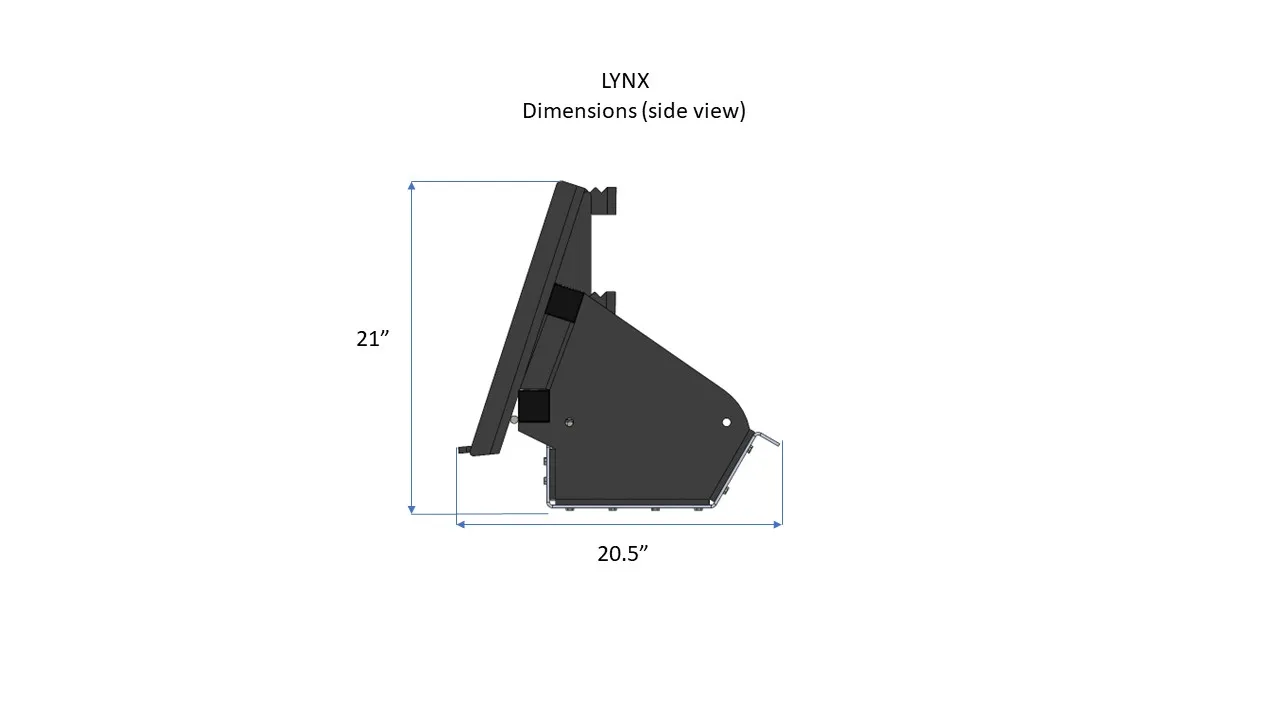
Shipping Info Weight: 399.0 lbs | Length: 77 | Width: 24 | Height: 23

$4,849.99 USD

Specs

Lynx Series Lynx 68
SKU LY68
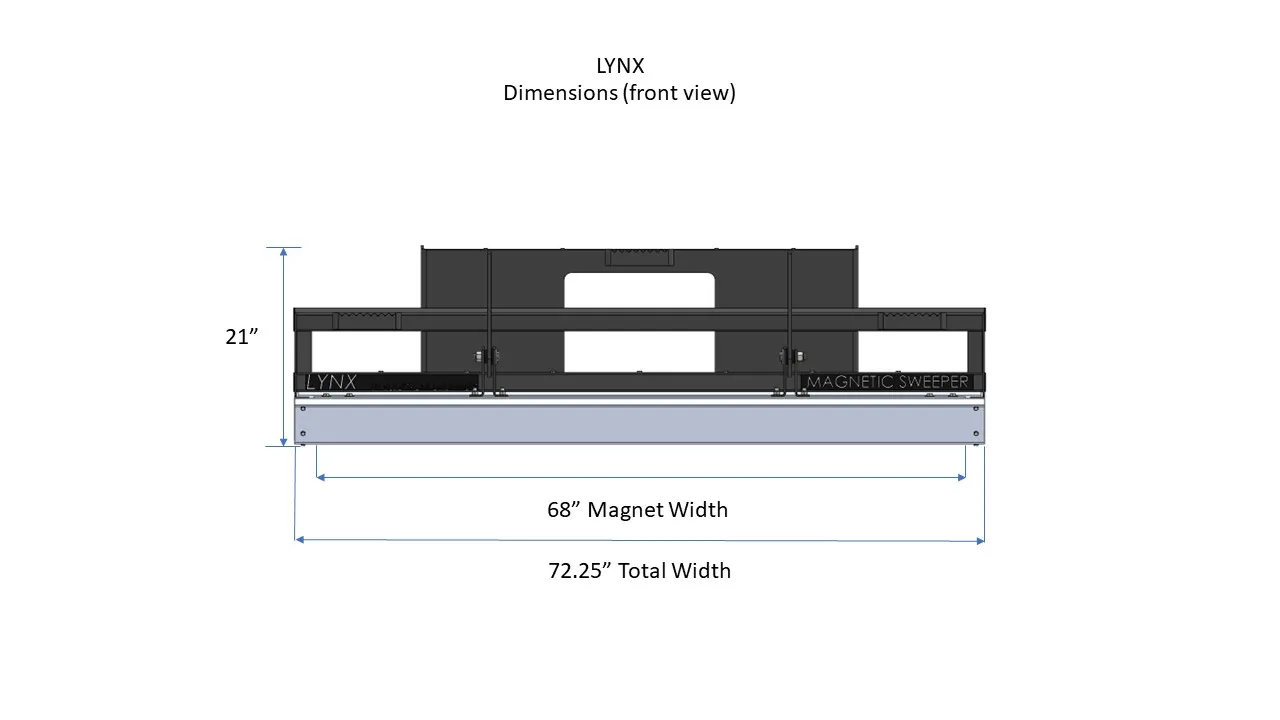
Sweeper Width 68″
Magnet Type Permanently charged ceramic magnet
Cleaning Off Method Swing out clean off pivoting magnet system, gravity powered.
Maximum Lifting Height (using 2.5”, 8 penny nails) 8.5”
Sweeping Height 2”- 5” recommended
Terrain Surface All Terrain
Sweeper Weight 348 lbs
Shipping Weight 399 lbs
Pricing Range $4,849.99 USD

CAD Drawings

Reviews

3.0
Based on 1 review
5 star
0%
4 star
0%
3 star
100
100%
2 star
0%
1 star
0%
1-1 of 1 review
  1. Was sold that by tipping the attachment the metal would detach from the magnet. I have to take the metal off by hand every time.

Crate required for international ocean shipments

$199.38

Debris Digging Rake for Lynx, dislodges metal from dirt

$1,284.99

Features

Lynx Magnetic Sweeper Preview

Lynx Magnetic Sweeper Feature pic

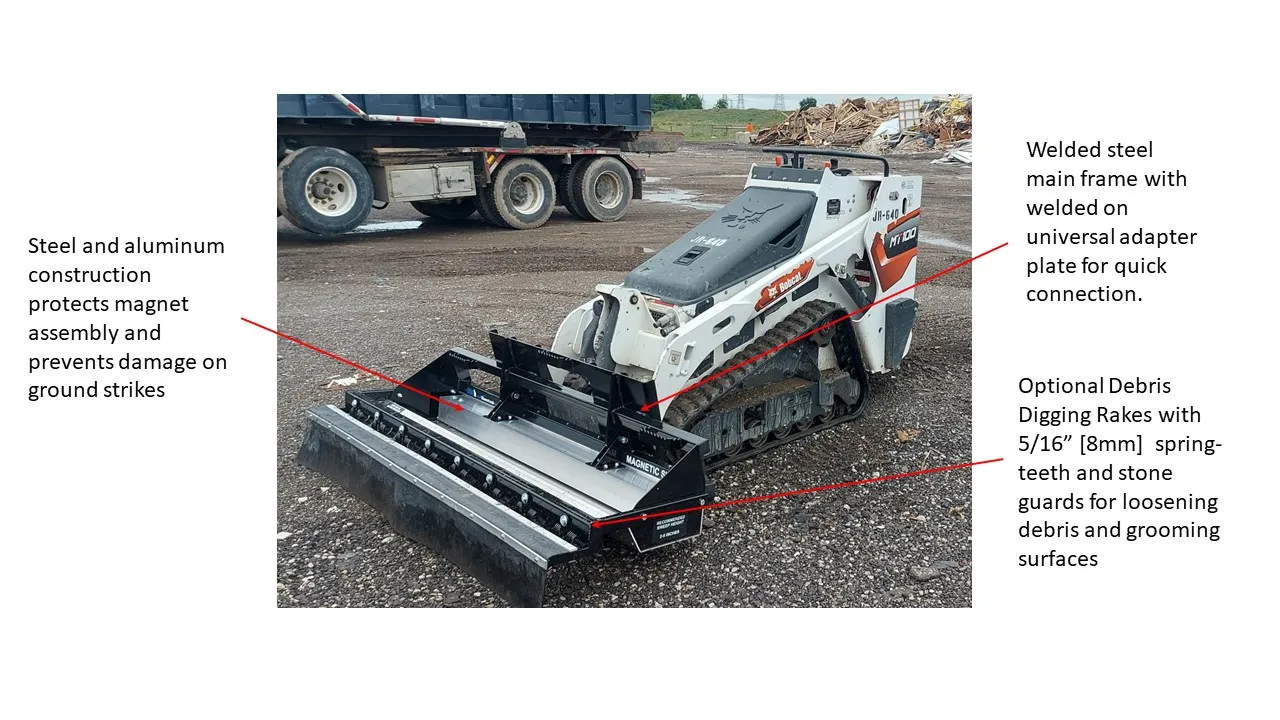
A: Steel and aluminum construction protects magnet assembly and prevents damage on ground strikes

B: Welded steel main frame with welded on universal adapter plate for quick connection

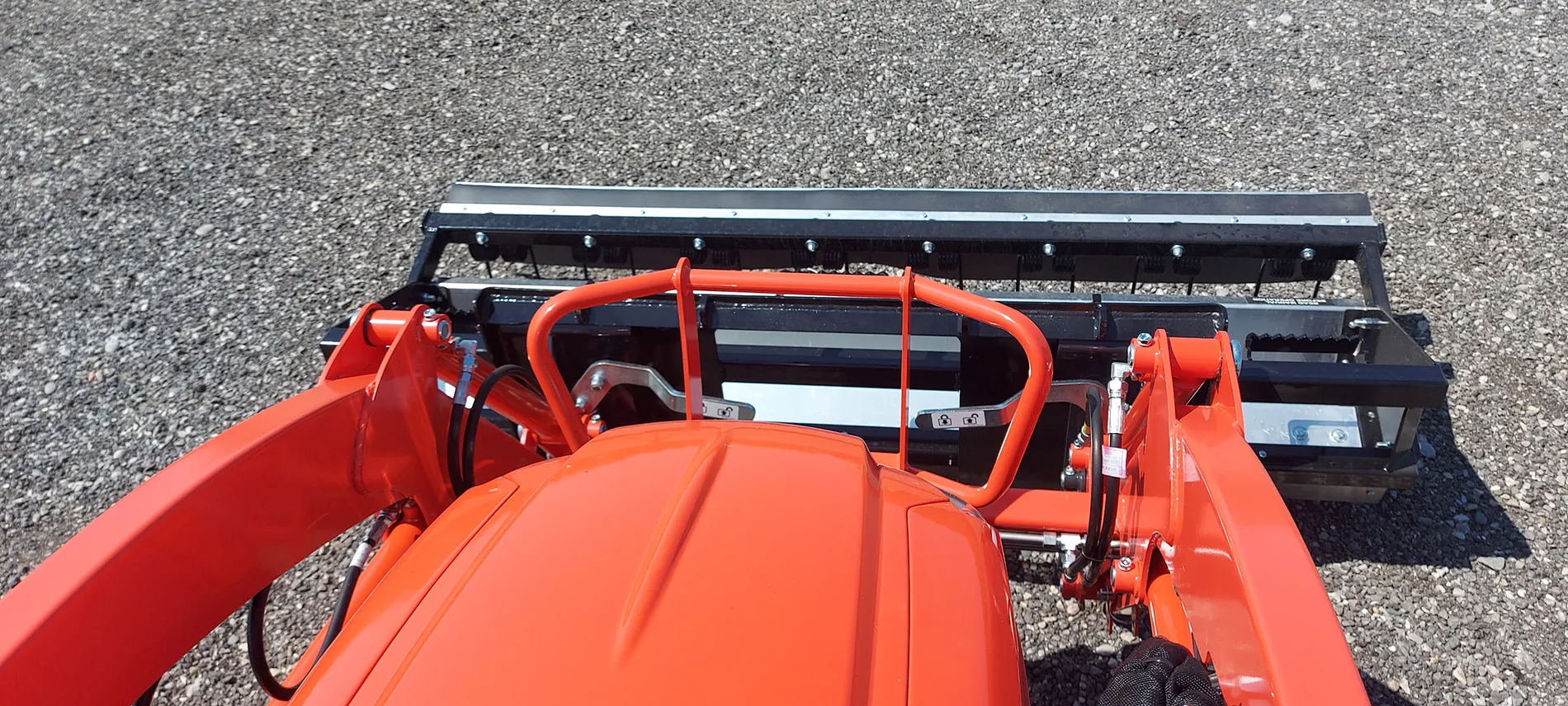
C: Optional Debris Diggin Rakes (DDR) with 5/16” [8mm] spring-teeth and stone guards for loosening debris and grooming surfaces

Lynx Front Mounted Magnetic Sweeper Features Overview

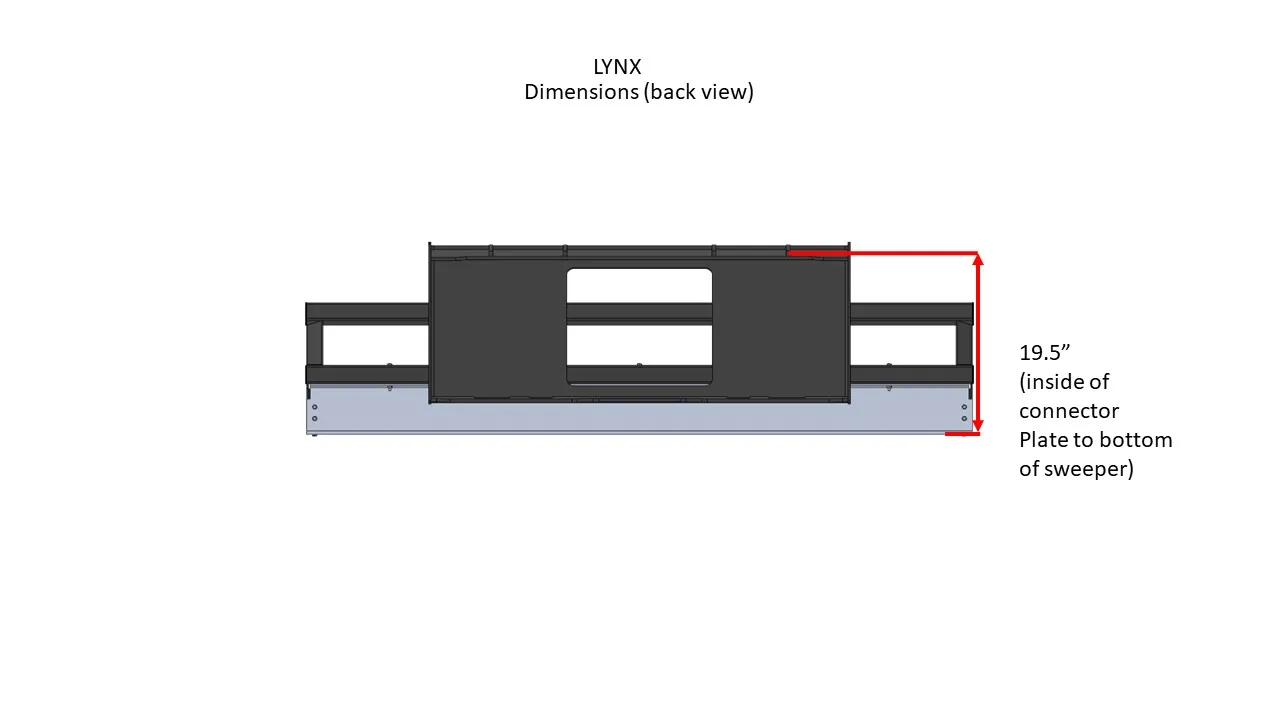
Okay, here’s an overview on the features of our new Lynx magnetic sweeper for skid steers and compact tractors. We have it on a sub-compact model now, which it’s perfectly compatible with if you have the universal adapter plate style connection point, which is the same as a skid steer. This just hooks on quite easily, just like a bucket. You go in, click your safeties down, and it’s good to go. It’s 19 and a half inches from the top of the adapter plate to the bottom, so that’s for easy setting of the sweeping height. Roll it all the way back and then set your arms— for some skid steers as low as they go, for tractors you might need to keep them up a little bit just because tractors generally go lower. So, yeah, you set your sweeping height; we recommend two to five inches, and if you have your debris digging rakes attached like this, this is an optional piece, you want to keep it rolled back if you don’t want to use your rakes. If you want to use your rakes, you just roll it forward as you’re driving, and that’ll put your rakes in the ground. But we’re on grass out here, so we wanted them up so we don’t tear up the nice grass, so we just kept it back and we’re sweeping that way.


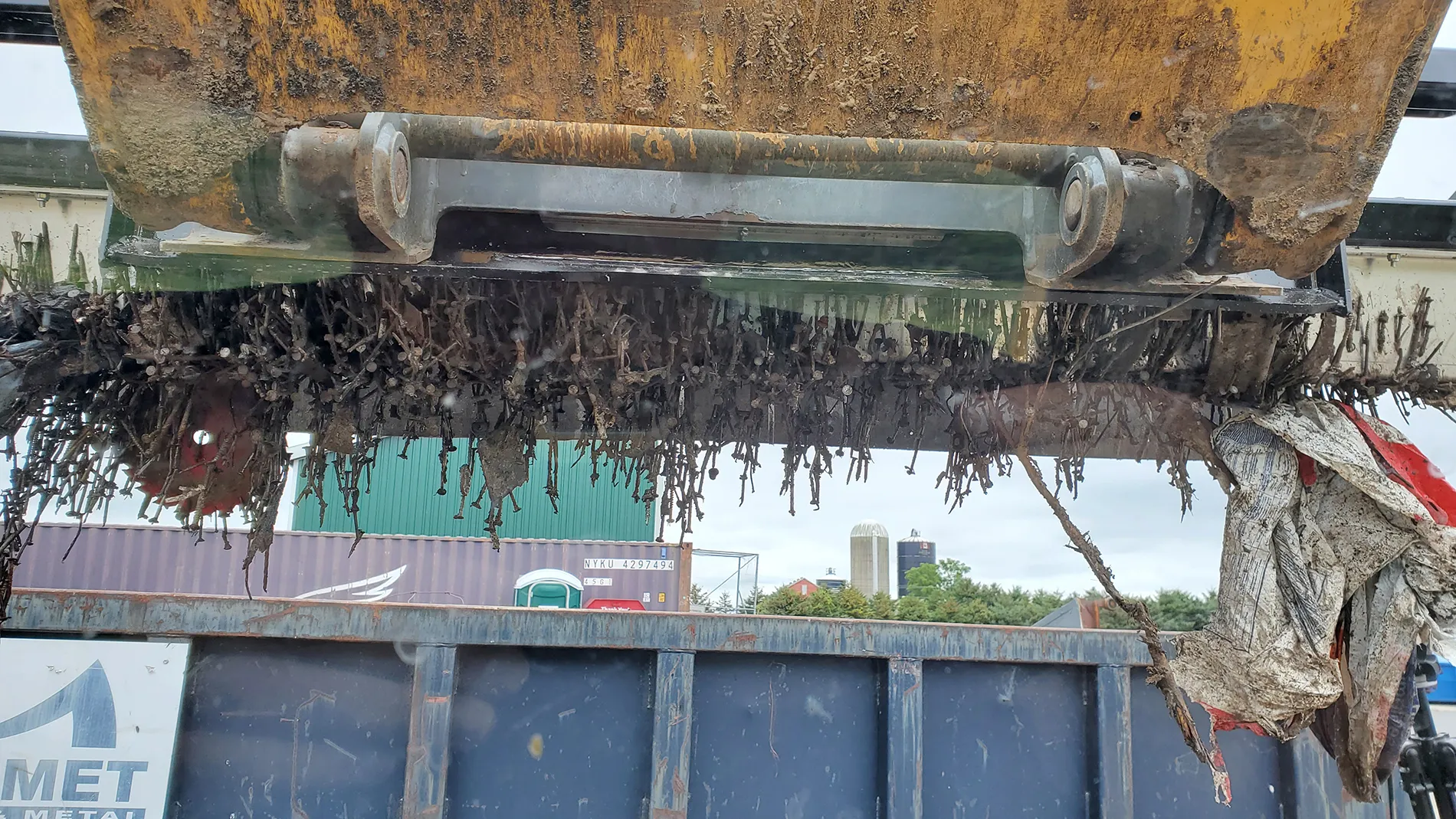
Obviously, as you’re driving, you’re going to be going over terrain and you’re going to have to adjust the height, so that’s done just using your lift arms on your tractor. Go up, go down, just adjust the terrain as you need to. It’s not completely necessary because this magnet touches the back of the housing here. So what that does is it prevents any nails you collect from getting wiped off if you do hit the ground, so they’ll just snap around to the back of the magnet.


So, this is a four and a half by four and a half inch magnet, the same as a lot of our hanging magnets that we sell, the same style housing, and that uses the same clean-off method as our Meerkat and Sokoke models, where it’s just like emptying a bucket out. To clean off your magnet once you’ve collected all your debris, you just roll the piece forward, just like emptying out a bucket. This will swing away from the back housing— it’s kind of magnetized to the back, but once gravity takes over it’ll swing away, and that will let you release all your debris.


So the unit is 68 inches wide. It weighs about 350 pounds, so good to use on most small tractors. I mean, if you have a tractor smaller than 350-pound lift capacity, you’re probably not looking for a piece like this anyway. So this is generally for farm use. If you’ve got a contracting operation that’s got some metal to clean up regularly and you have a skid steer or a tractor or something like that, this is going to be a great option for you. It’s fairly inexpensive, it’s fairly light, it’s easy to transport, you can move it around without power equipment if you want, it only weighs 350 pounds. And on the bottom, it’s got a nice thick aluminum skid plate/debris pan, so you can skip it off the ground if you want and it shouldn’t break anything too quickly as long as you’re not ridiculous with it.


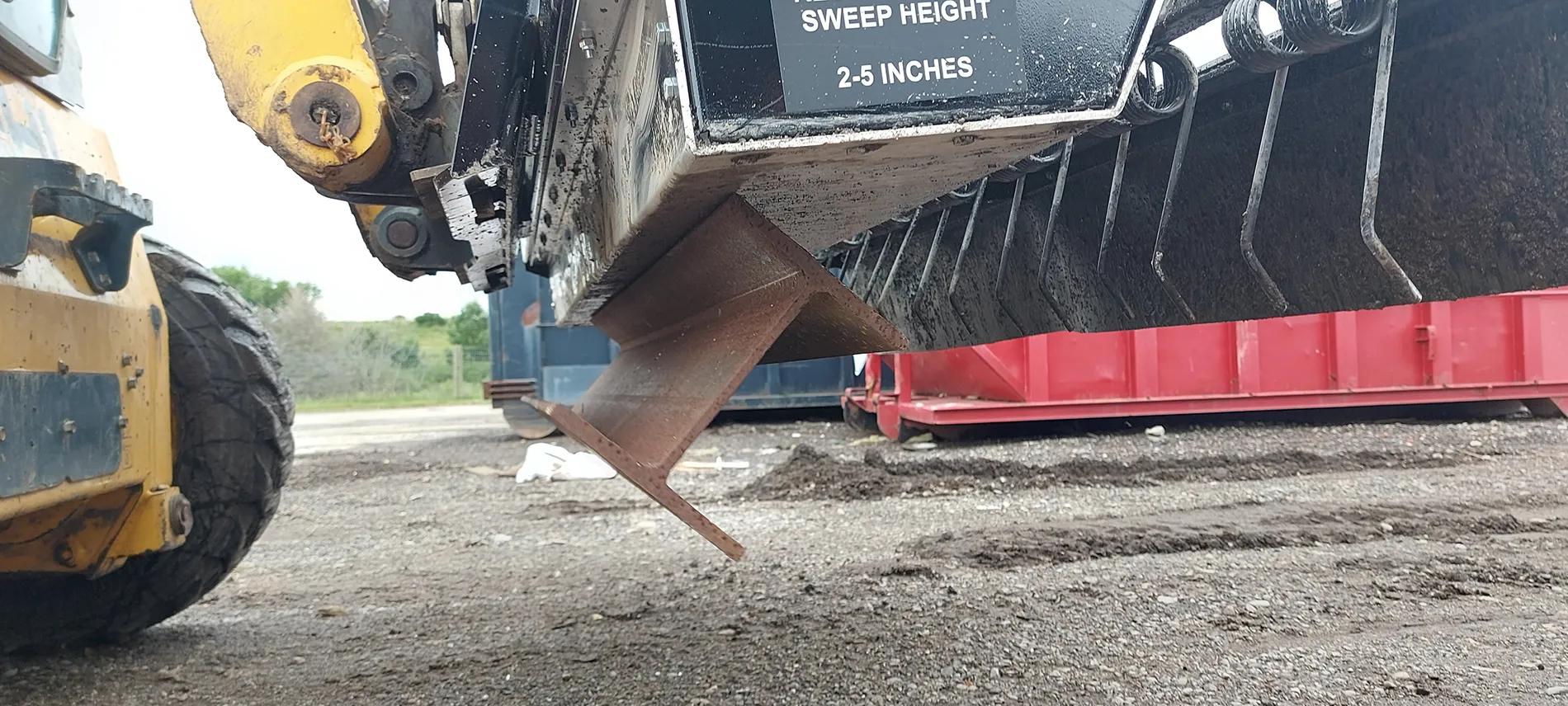
Other features of it, like I said, 68-inch sweeping width. It will pick up a two and a half inch nail from a height of eight and a half inches, so you can have the bottom of this pan eight and a half inches off the ground, and if you put a two and a half inch nail on it, it’ll flick it up and it’ll catch it. So that’s why we recommend a two to five inch sweeping height, because that’ll give you a good power for picking up most debris. We did pick up our 70-pound I-beam with it, or 70 to 80 pounds— we haven’t weighed it yet, but we will someday— and it picked it up no problem as long as you were touching the I-beam. So it does have a lot of holding power. Like I said, it’s a smaller four and a half by four and a half magnet, a bit lighter duty than the rest of our skid steer magnetic sweepers, but it does a great job. We’ve been using it for the last week or so, and it really does a good job of cleaning up areas quick. We’re at a landfill— it cleared easily 100 pounds of nails in the span of an hour. We have pulled out of the construction site out here. It’s obviously not as contaminated as a construction dump, so we have been picking up some nails, but it’s nothing too crazy.


So, this thing, when you purchase it from us, it does not come with this piece on the front here. This is our debris digging rake setup. These are 5/16 spring teeth, eight pairs of them. They are 5/16 spring steel, so when you push them into the ground they’ll dig in about an inch, and that helps if you got like a rutted gravel parking lot. That’s going to help you to smooth it out, number one, and number two, it lets you know where you’ve already been. Number three, if there’s any debris that’s kind of stuck in the ground at all or, you know, been run over a couple times and it might be an inch down, it’ll flick it up and then it’ll get caught by the magnet back here once you drive over it.


On the front of that, we’ve got our kind of a mud guard type material— that’s just to prevent any stones from going flying if you’re actually using the rake on gravel around cars or something like that, so you don’t want to be, you know, flinging rocks into a windshield or something. So that’s what we’ve got this here, but this is an optional piece. It just bolts on; there’s no real adjustability to it other than the roll of your position of the hydraulics. So, you roll forward, it’ll dig deeper, you roll backwards, it’ll dig less, and this just simply bolts onto the sides. You can just leave it on here because, like I said before, it’s perfectly operational with it on. If you don’t want to use it, just roll the thing back; this magnet’s strong enough to just work off the back corner and everything will pick up like that.


And, yeah, good little unit. It’s got a nice little sticker of a cat right there— that’s pretty key. So we always have nice little animals on our equipment. This one’s the Lynx, so it’s just a little kitty cat right there. And, general rule of thumb, you don’t want to scratch this— if you scratch this, it’s not going to work anymore. The whole thing, like everything, will delaminate, the nice powder-coated frame will crack, and you’re going to have to order a new sticker.


So, yeah, powder-coated frame, heavy-duty steel, lots of aluminum, steel, sturdy construction. We’ve hit it off the ground many times and it’s still going. We’ve only been running this one for about a week, but it’s got no real signs of damage so far. It will collect some rocks inside this pan, but easy enough to get out. It’s just like a bucket; just tip it forward, all these rocks are going to come flying out, and if they don’t you just get some of them, sweep them out, it’s not that hard.


There you go— Lynx magnetic sweeper by Blue Streak Equipment. Find them where all good Blue Streak Equipment magnetic sweepers are sold.

Skidsteer Magnet Picking Up IBeam

Versatile Front Mounted Magnetic Sweeper

The Lynx front mounted magnet attachment utilizes a universal adaptor plate, made for skid steers, track loaders, and many small tractors. Click on one of the tabs below to see the Lynx in action on a variety of equipment.

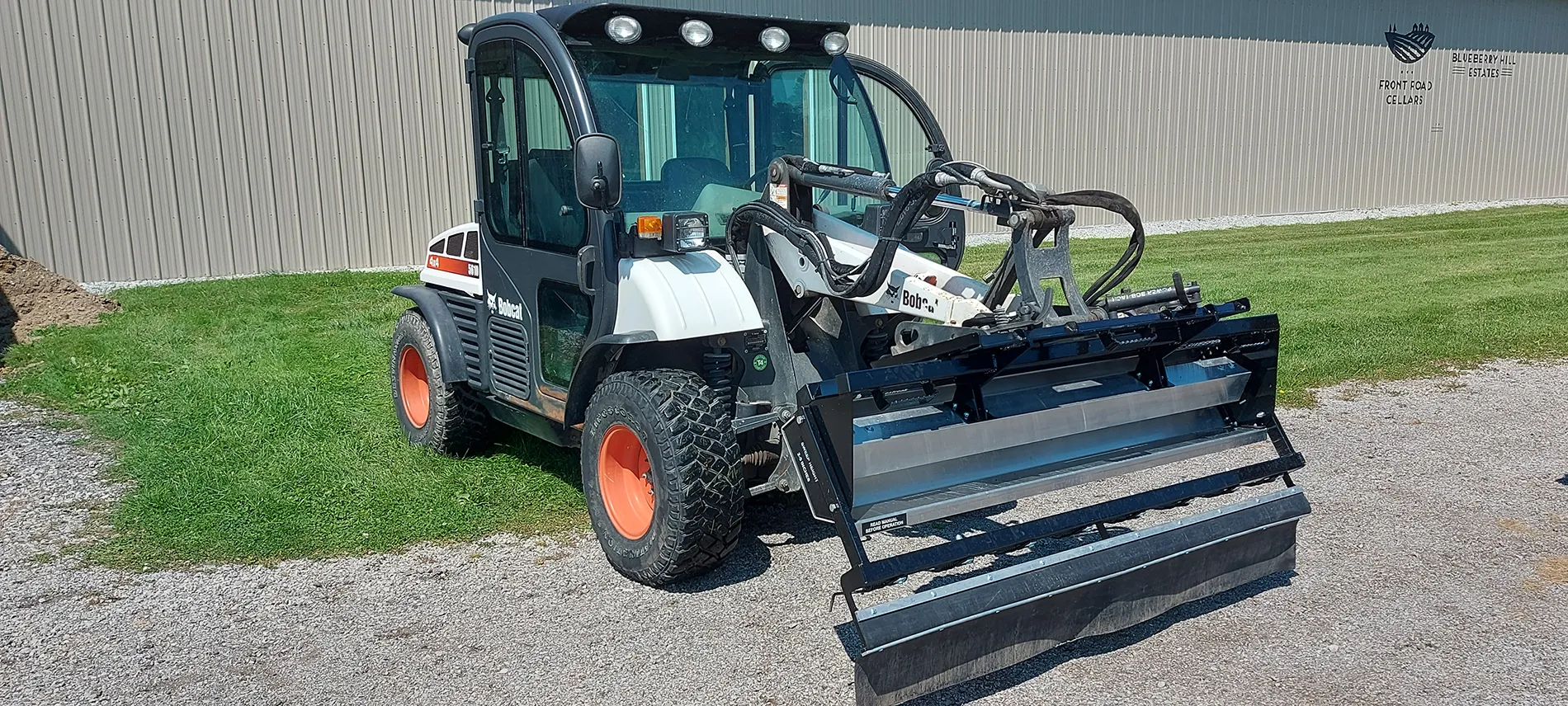
Okay, so we’re here at Front Road Cellars. It’s a winery local to us that has a Toolcat. They let us put our new Lynx magnetic sweeper on, so we just talked to the owner here, and he says they have been getting a couple of flat tires recently, just because they’re doing a lot of renovations around this place fairly regularly.


So, we’re giving the owner of the Toolcat just a quick rundown on how to use the Lynx more effectively. What we found here is the Toolcat doesn’t actually go as low as a skid steer does on the lift arms. He’s got it pulled down to as low as it goes, and it’s still about four inches up, but that’s in our operating range, so it’s going to be perfectly fine.


He’s got that thing set to crawl mode now, and once you get the rundown, it should be pretty straight forward. You’ll probably figure it out pretty quick. It’s almost like using a snow plow, but there’s no snow.


These guys do a lot of renovations around here pretty often, and this is a working farm, so there are pallets going in and out that get broken up, and then the nails get released onto the property. They host events at this building we’re sweeping in front of, so we don’t want people out here getting nails in their feet or in their tires in the parking lot on the way home.


Here at Blueberry Hill Estates, they do events in this building, and they’re always doing construction and they’re always working around here, so there’s going to be some metal debris. You can hear stuff getting picked up already. We got our Lynx magnetic sweeper on this Toolcat and, yeah, we’re just doing a quick little run around the property. We’ll do here, we’ll do the parking lot, we’ll probably get into some of the shop area because these guys are a working farm, so there are going to be some nails around. Yeah, you can see there’s some nails and some staples already caught in there.


Oh yeah, got a little bit already off one pass.


So we just did one pass here at Blueberry Hill Estates, and the owner here was shocked to see that we actually did pick up nails on the first pass through this grass. We got some nails, some fence post tie downs, and some screws, and I can still hear more stuff getting picked up now as we’re getting along.


So this new Lynx is the low-cost—our lowest-cost right now—skid steer magnet. The point of this one is basically, this is the perfect application for it. It’s a pretty big farm, they’ve got a lot of equipment around here, and they’ve got a lot of construction and work going on. If you have the equipment to put this Lynx on, it’s probably worthwhile to maybe look into getting a magnet like this to ensure that, in this case, your customers—your guests at your events—aren’t getting any flat tires in your parking lot.


So yeah, I just spoke, I guess, five minutes ago or six minutes ago. We attached this thing to the Toolcat and we just gave the owner a quick rundown on how the magnet works and what he should do to operate it, which is just roll it all the way back, set it down, and that’s perfect if you don’t want to use your rakes. If you want the rakes, just roll a little bit forward like you would, you know, dump a bucket out—just roll it forward—and then the teeth will start to become engaged in the ground.


So he’s doing that now, heading through that fence line. That’s where we’re getting a lot of metal debris. He’s got it set a bit high, but yeah, we’ve got some stuff collected there on the bottom. I can see it from here.

Okay, here’s the Lynx magnetic sweeper on a, uh, sub-C compact, uh, tractor with a loader. So, this thing has the standard style skid steer type attachment hookup system, so that thing went on there in about five minutes. It’s pretty easy. We’re just here at this dealership; they’ve, uh, recently laid down more gravel on this area in the last year or so, so there shouldn’t be too much debris on top of it, but we’re running the rakes through it anyways just to see if any, uh, debris gets collected.


So where you’re going to find debris on a place like this is usually around shop doors or where stuff’s going in and out all the time. So these guys have, obviously, the storage shed behind them and then also the workshop to our left here.


So, at only about 350 lbs, the Lynx is no problem for even the sub-compact. This is a Kioti model SL 2420, so if you want to look up what lifting capacity is on that compared to what you might have, uh, that’ll give you an idea whether you can use this sweeper on your sub sub-C compact tractor.


So this is a fresh gravel here, so he’s not making too much of a mark, but we’re not trying to mark this guy’s, uh, driveway up right now—we’re just trying to get any debris that might be below the surface up to the surface so we can collect it.


We’ve collected some debris here at the tractor dealership, and we’re going to do a clean-off with this sub-C compact tractor. So we’ve found so far that tractors, uh, work perfectly fine for doing this. They’ve got a nice tipping function on the front, so just clean it off. You just empty it like you would empty any bucket—just simply tip it forward. The magnet will swing away, which drops all the debris on the bottom, and then you’re good to go—keep sweeping again.


So there’s some debris on the ground there—mostly just screws, washers, that sort of thing. Some nails, some D-rings, tractor pins, remnants, that kind of stuff. So, uh, we’re going to run the yard a little bit more here and, uh, see what we can collect on that.


Okay, so this is an area of the, uh, dealership lot where it looks like they dump a lot of old concrete and, uh, just junk to have laying around here. It’s a bit of a rougher terrain situation, so we’re trying the, uh, Lynx magnetic sweeper out on this sub-compact tractor. The Lynx has a nice aluminum pan on the bottom that will protect the magnet in the event of a ground strike, which is bound to happen when you’re doing stuff like this. So, while it’s not the stainless steel that’s found on the Meerkat or the Ski, it’s, uh, plenty strong for this kind of application with this sort of terrain and this kind of tractor.


So areas like this, uh, where people are always going in and obviously throwing logs and rocks and whatever else they’ve got laying around, that’s a prime spot to get a flat tire because you’re still driving in here to dump stuff. So by doing some sweeping around here, it’s a good way to, uh, mitigate any potential flats you might have.

So, like I said, we got this out at our landfill.

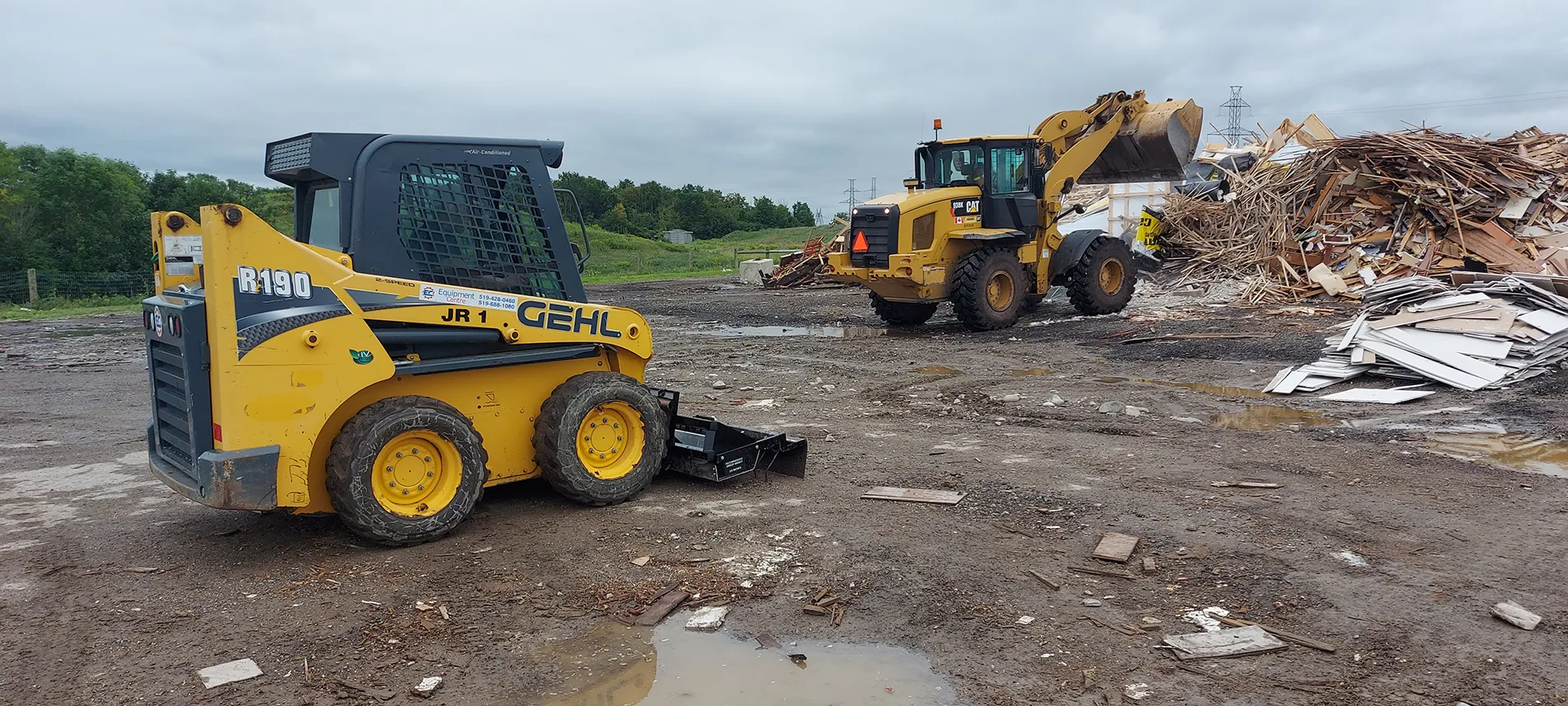
Here, and we’re just going over the—uh, you can see the sign over there says “shingles,” so this is where roofers and contractors are going to come to dump their shingles off. And obviously, with the shingles they pull off a roof, there’s bound to be nails in them. So last time we were here, I actually saw a truck get a flat tire just from coming in and out of here. So we are just going to come and clean up the place the best we can while testing this new magnet. So this magnet has a 4 1/2 x 4 1/2 magnet assembly in it, which is very similar to most of our hanging magnet line. So what that gets you on this one is an 8 and 1/2 inch pickup height, so the magnet will pick up a 2 1/2 inch nail from a height of 8 1/2 inches. So with the recommended sweeping height being 2 to 5 inches, which Ben’s running it at right now—well, not at the moment, but when he was running it, it was going about two to five inches—you have plenty of pickup power to get most nails. I can see a bunch of nails already getting collected at the bottom here.


So there are some key differences between this thing and the Meerkat and maybe the Sokoke. They do operate on a very similar gravity dump clean-off method, same thing where you clean it off like a normal bucket, where you just dump it forward and everything falls off. What the Lynx has compared to the Meerkat is an aluminum pan rather than a stainless steel pan. So this is to save weight to enable it to work on these little tiny skid steers, as well as it saves money. So the Lynx weighs only about 350 lb—I think it’s slightly less at 348—so it’s very manageable to move around. You can move it around a shop without heavy equipment if necessary, put it on a dolly, easily move it, but it still has plenty of pickup power. I see lots of nails getting collected there, but that aluminum pan, rather than stainless steel, just makes it a little bit more vulnerable to ground strikes. So we’ve already hit the ground multiple times with this thing today and it hasn’t broken, but the aluminum’s definitely not as strong as steel, so you’re not going to want to pound this thing into the ground as much.


It does seem to have very good pickup power, though. Ben’s going pretty quickly on that little skid steer and is still picking up some nails—you can hear them clicking. So this sweeper is a very budget-friendly option for lots of different professions. This could be useful for farmers, this could be useful for landscapers, this could be good for construction crews, because some of our other sweepers are pretty expensive for just a normal construction crew to buy a lot of them. You’d have to have a really big nail problem if you were going to need our bigger sweepers to clean it up. This thing’s more of a budget option. Like I said, it’s made out of different materials—it’s lighter, it’s weaker, but it’s a very good option. It still does a great job of cleaning up these nails, and any big construction crew that’s got a skid steer and is maybe doing like a suburb project or doing a couple houses, this thing would be invaluable to get into tight spaces and clean up any nails or metal that’s left behind by your crew.


Also, same thing with a farmer. I’ve gotten a lot of requests over the years for something to clean out hay, because a lot of farmers have hay they’re putting into horse stalls or they plan on putting into horse stalls and they want to run through it to get the nails out. So with a lot of magnets, that’s not easy, but on a skid steer, you can kind of push it through and break through the hay, especially if you have our de-reading rake option, and skid steers are pretty easy to come by on most farms. So this is a nice budget option to just clean up pastures, clean up around fields, clean up around your shop, and like I said, clean up hay to put in your stalls.


And on the construction side of things, this makes a very unpleasant job of walking around pushing a magnet all day very easy, because in most cases you just sit in your skid steer and drive, and this one you just kind of stand on it. So it’s a very easy option to use.

Okay, so we got the Lynx magnetic sweeper on our regular size skid steer now. We got the debris rakes deployed, and we’re just going to do a couple more passes around this area to clean it off. So, we’ve gone around with the stand-on skid steer already, as you can see from the marks on the ground where we’ve already been, but this place—uh, we come here to test usually whenever we have a new large magnetic sweeper, and we haven’t been here in a little while because I think the last one we came out with was the Sokoke last fall.


So, this place has accumulated a ton of nails since we’ve been gone. We were basically just operating in this area here, and we’ve pulled out a pile of nails that’s as wide as this magnet—it’s 68 inches wide—and it’s got to be a three-inch, four-inch tall pile. So that’s a ton of little nails we pulled out of here that’s going to save a lot of this landfill’s customers from getting flats.


So, this is the smallest of our skid steer line at the moment. I don’t know if we are going to come up with anything smaller, but it’s still massively powerful. It’s got our normal four-and-a-half by four-and-a-half magnet in it that’s used in a lot of our hanging magnets, and it does a great job. It’ll pick up nails from eight and a half inches off the ground, and we were operating it at like two inches at the most—between two and five inches is what we recommend. We’re operating at like two to three here. We’re really taking it low, and it’s just doing a great job. It’s filling up with nails almost immediately once you get out here. Just on that one pass, there’s probably a whole pile of nails on the bottom of that thing.


So, these people are driving in and out of this place all day, especially garbage trucks, and even a garbage truck can get a flat tire from these nails—like, some are long enough to break through that big tire they’ve got. So, we got the rakes on there just to kick up some stuff that might be stuck in the ground.


You see what the rake also does, it pushes some stuff around. So, if you’ve got debris on the ground—like boards or shingles over there, or trees, or whatever you got on your property—the rake will push it out of the way and you can hopefully dislodge the nails that are stuck underneath it, or any kind of metal debris for that matter; could be clips on a fencing post.


So, we’re just doing some passes here. As you can see, the debris rakes leave us a nice mark of where we’ve been. So, with these rakes, you see we’re just making a path. We’ve done one area, you go along the next week with sweeping width, and you can do 68 inches at a time, so that’s about as wide as this is. The normal skid steer—this is a normal skid steer—and it’s about as wide as the wheels are, maybe a little wider, actually.


So, the sweeping width is 68 inches, but the whole magnet itself is about 72, just ’cause there’s obviously the housing on the outside and the bolted-on debris-digging rake. So, debris rakes are an option, but it’s a very good option. I think a lot of people should get it with this magnet just because it really extends the functionality of this thing. Rather than just kind of grooming the surface with a magnet, you can dig down and get the stuff that’s stuck under the ground, because this thing will pull nails out of the ground, but it’s a lot easier to pick more of them up when you’re actually agitating the ground and getting things kicked up.


So, you’ve probably seen the big rubber guard on the front of this magnet. What that is, is what we call the stone guard. When we first developed these larger debris-digging rakes for skid steers—they have bigger spring teeth than the original ones we had—we found that when we were testing it in our gravel lot, it was flinging stones all over the place. So that necessitated coming up with this rubber deflector on the front. So, if one of those spring teeth does flick back at you, it’s not going to send a stone through your car windshield or something.


You see this landfill, they’ve got a ton of wood back there that’s dumped off—a lot of those are actually Seadoo and snowmobile crates from a dealership that’s about half an hour away—and then the rest of it is just old building supplies and pallets, dressers, anything from construction or demolition activities. If you’re renovating your house, this is where you kind of dump off the leftover garbage.


So, you can see this pile of shingles here. This is what’s left after, I guess, they cleaned up the shingle area, at least moved stuff. There’s a whole row of nails on the ground right there and they’re poking up all over this little shingle pile and all over this area. I’ve kind of pushed a couple of the shingle piles off to the back there, but all over this area there’s shingles and you can see as I was driving around, there are nails sticking straight up like a little spike strip.


So, if someone accidentally drives over a corner of one of these shingles or something like that, that’s an easy flat tire right there. So, with this magnet, we can get those nails up out of the ground and, you know, hopefully prevent people from getting caught by the nail

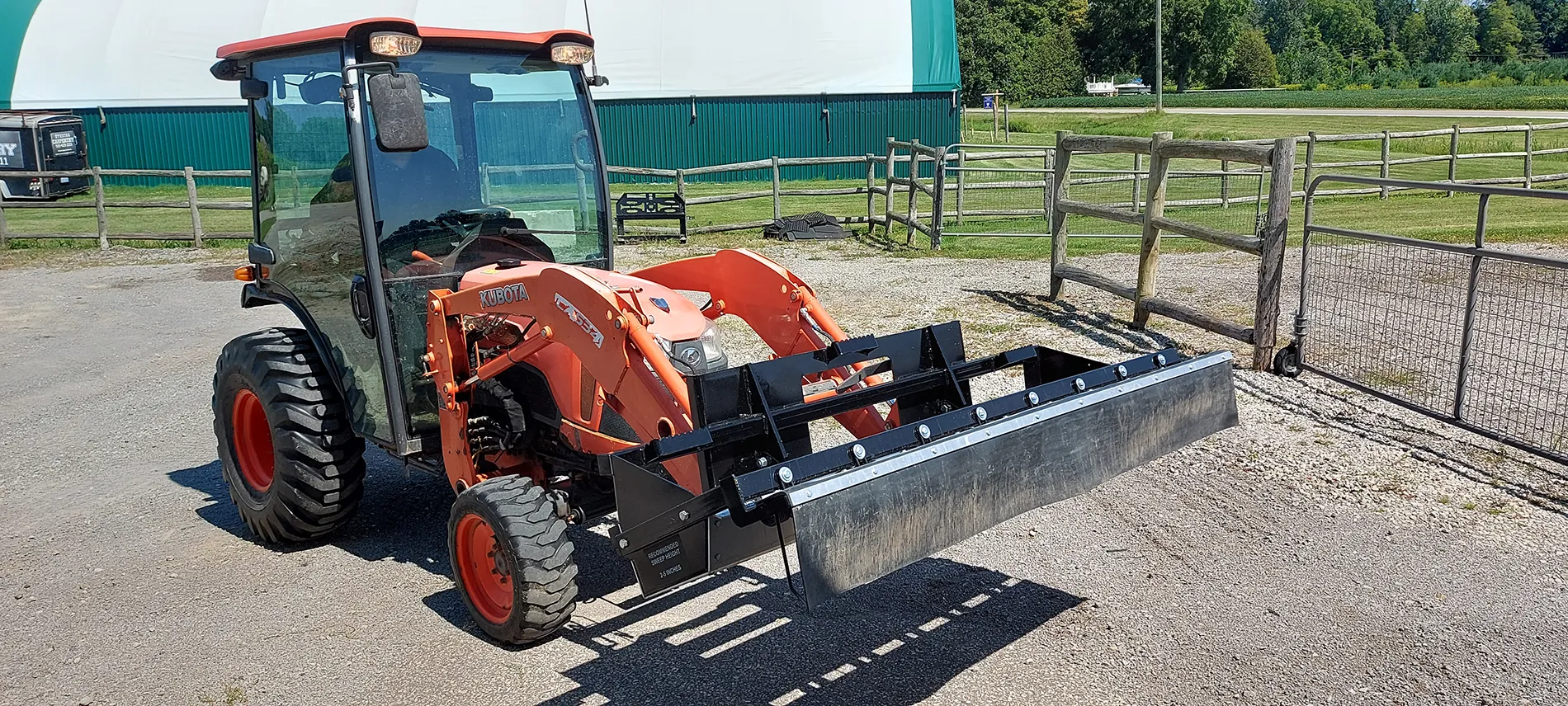
All right, so we’re bringing in this little Kubota here, and we’re going to hook that to the Lynx magnetic sweeper. Attaching this is the same as attaching pretty much any other implement. All you’re going to want to do is just hook into it like a bucket, and then he’s going to have to get somebody to attach the safeties.


There, so Ben’s going to see the safeties. That might take a little bit, and then they got to come back—there you go, there you go. So a little bit of finagling there and then it’s now attached to the Kubota. So this is just about the perfect size tractor to use this magnet. We could go smaller on the tractor, but this is just about what we’re looking for to try it out. These are commonplace on a lot of farms as well.


He’s going to go over, I believe, the parking lot here and do a little bit more sweeping with it. So that took all of 2 minutes to hook up, and the same thing with—just want to raise it up a little bit. There he was dragging the gravel, so it looks like when the magnet’s set on its lowest position here, or when the arms are set in the lowest position, it’s actually dragging the ground a bit. In this case, he’s going to want to have it a bit higher off the ground.


So yeah, we’re just doing a couple passes through the parking lot here. We are collecting nails still, and it looks like even rocks are getting picked up, so we got some high ferrous content rocks—there might be slag or something. Yeah, lots of bolts—someone must have dropped a box of bolts out here. Lots of stuff, man, got a lot of like 7/16 bolts in there, 5/16

Lynx Swing-Out Clean-Off System

The Lynx skid steer magnet utilizes pivots on the frame and magnet that allow the housing to swing away from the debris pan when tilted forward. Once the magnet housing swings away from the frame, all debris is released from the magnetic field and drops to the ground. If your equipment has sufficient lifting height, the Lynx can be cleaned off directly into a dumpster.

Okay, so this is the clean-off procedure for the Lynx magnetic sweeper. It works a lot like our Meerkat and Sokoke model, where when you tip the magnet forward, the magnet swings away and all the debris drops on the ground. So, what we just found out with this small walk-behind skid steer is it doesn’t have enough lift or tipping movement to empty off the magnet into a 5-foot bin, but if you have a lower bin or are just doing it onto a tarp or something like that, this will work perfectly fine.


So, as you can see, the magnet swings there on two pivots and magnetizes to the back wall. When you tip the magnet forward again, the magnet swings away, which releases all the debris from the magnetic field. Like I said, this little walk-behind or stand-behind skid steer won’t do this clean-off into a 5-foot bin, but it works fine onto a tarp or just doing it right on the ground.


So, here’s the Lynx magnetic sweeper picking up some of the debris we left behind from the smaller stand-behind skid steer. The stand skid steer didn’t have the lift or the tipping ability to clean off into this 5-foot bin here, so we picked up some of the stuff we left on the ground just because we couldn’t dump it into the bin, and we’re going to drop it off into the bin. This thing cleans off just like a normal bucket, like the Lynx, the Meerkat, and Sokoke. All you do is just tip it forward like a normal bucket, and when you tip it forward, the magnet will swing away from the back of the housing, and that’ll cause everything to drop off into the bin.


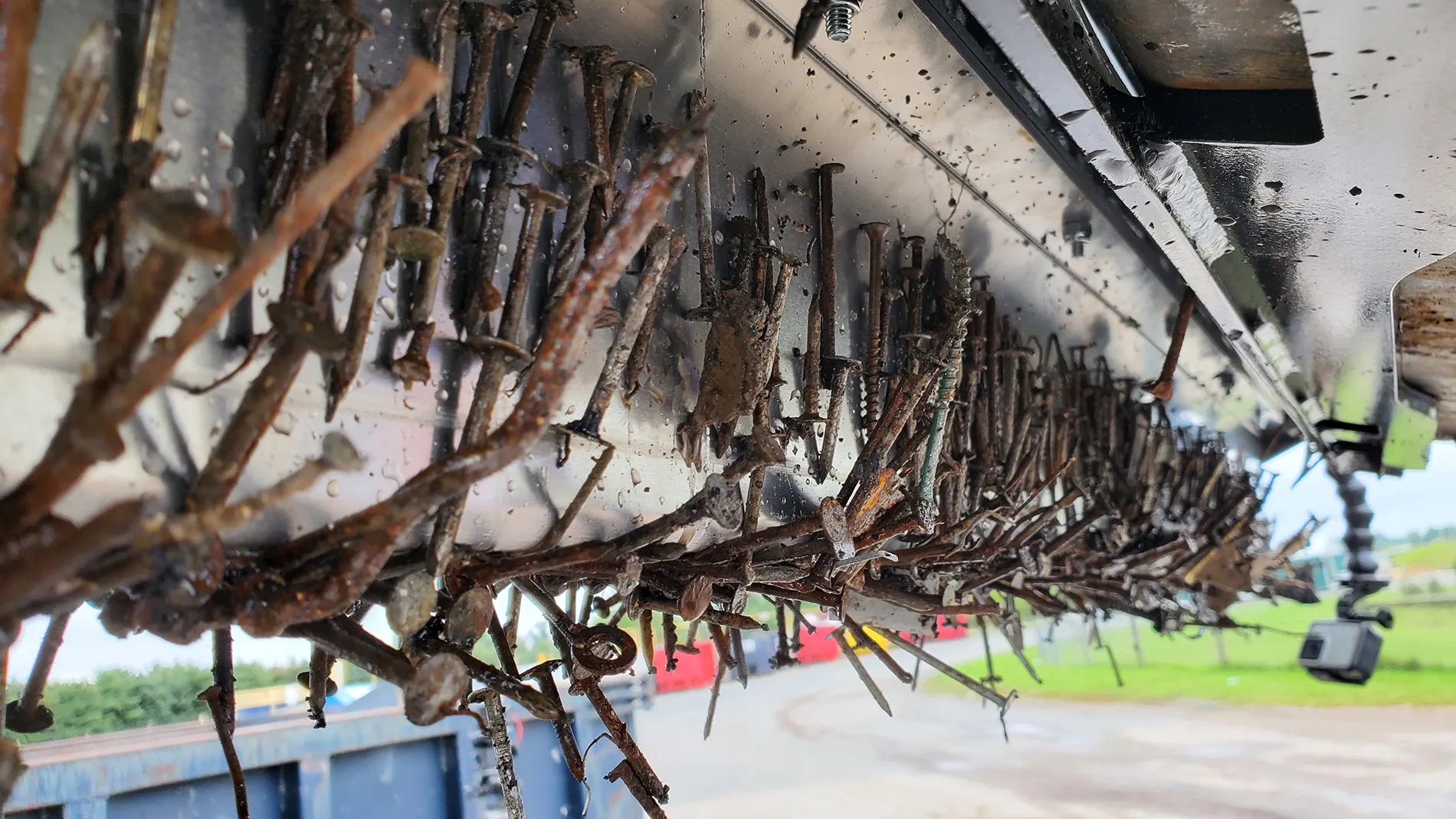
Now, you’ll get a few stragglers on there just because the whole back plate gets magnetized due to the size of the magnet and the aluminum pan, but that’s bound to happen and it’s not really going to affect the performance having that many nails on.

Wrap Around Function

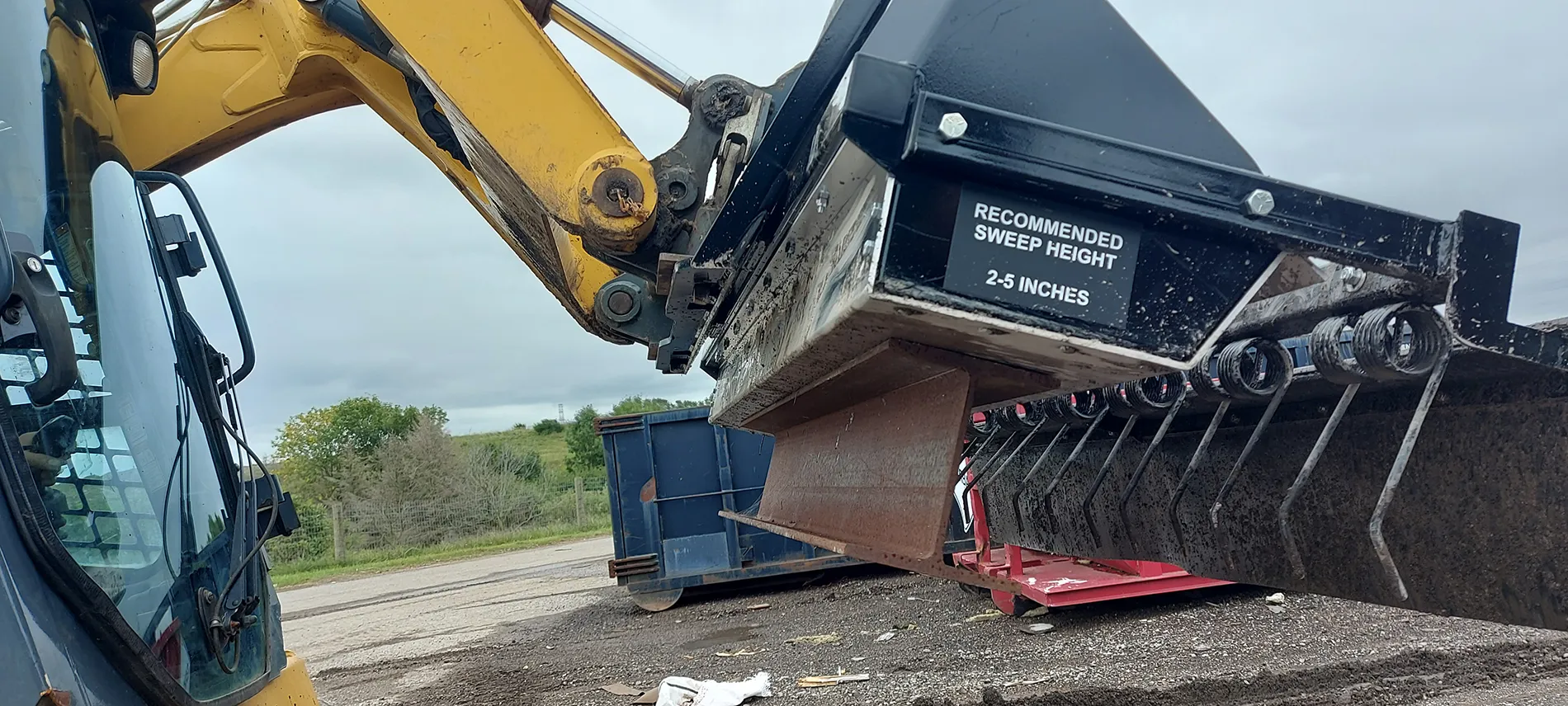
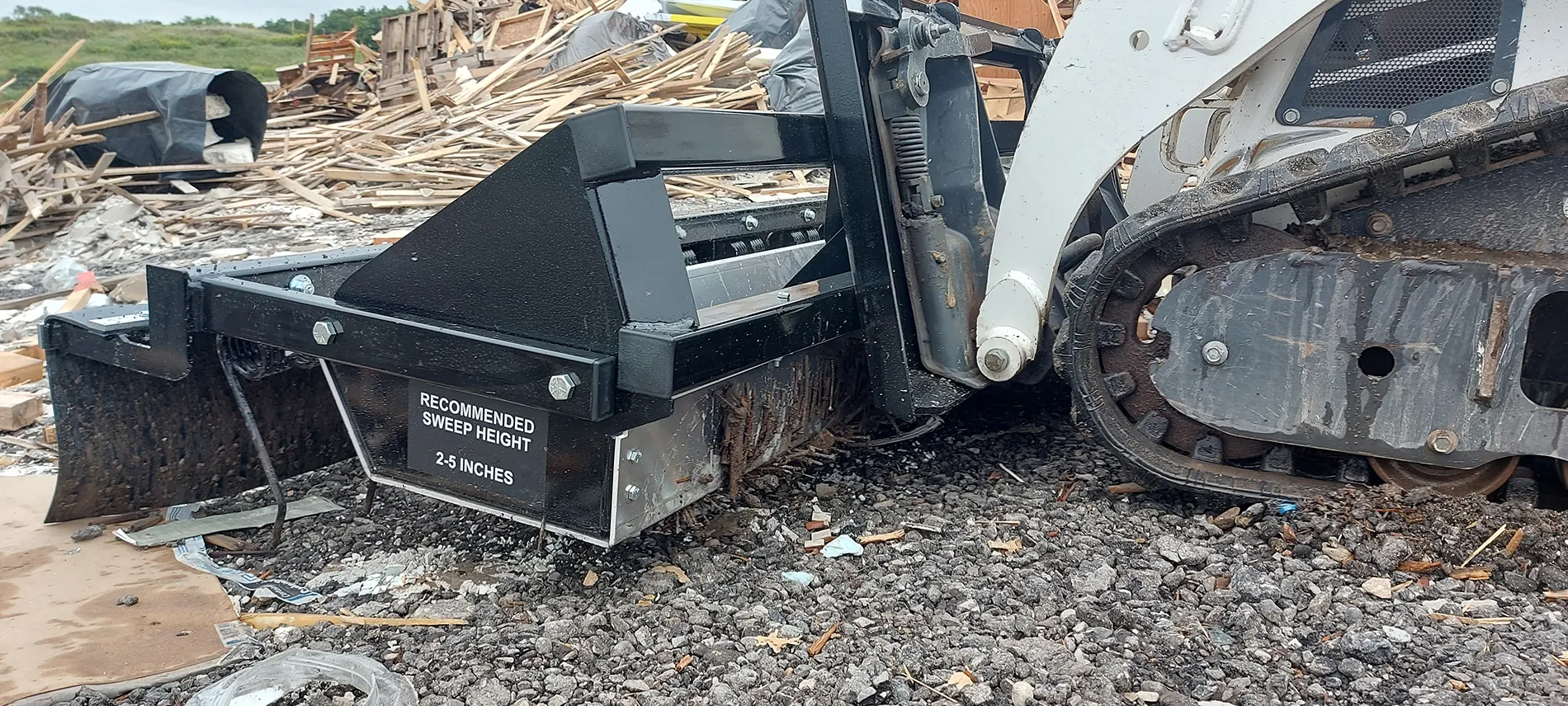
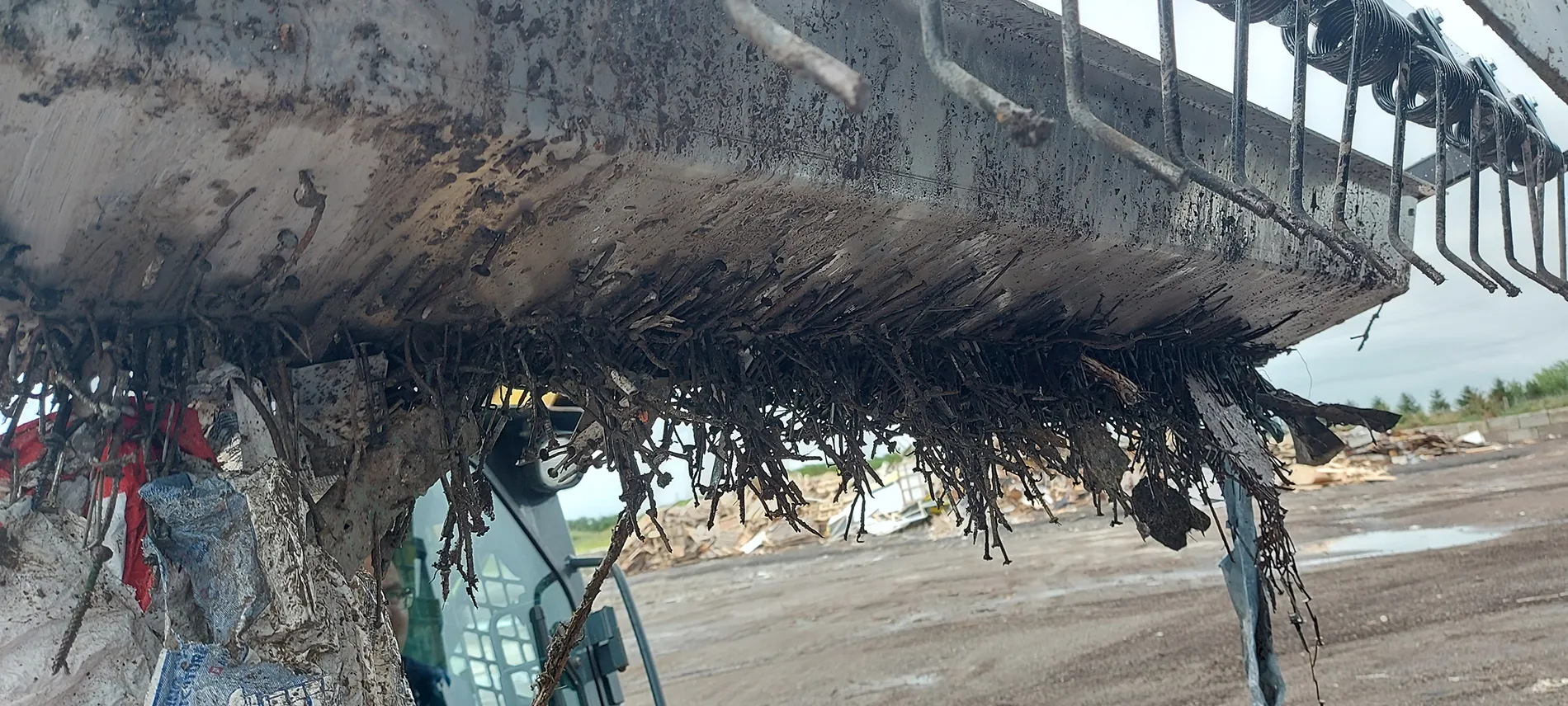
Since the fully packed magnet housing on the Lynx front mounted magnetic sweeper touches the back of the debris pan, any debris that gets wiped away from a ground strike will be snapped around to the back of the magnet as shown in the photo below.

Wrap Around Function on Lynx Skidsteer Magnet

Lynx Skid Steer Magnetic Sweeper Power Test

Economical Skid Steer Magnet Attachment Holding Power

The Lynx’s permanently charged ceramic magnet is smaller than the other skid steer magnets we offer but it still performs at an exceptional level, it can easily pick up a 108 Lbs I-Beam just like our larger models. The Lynx magnet will also pull a 2.5” inch nail from 8.5” inches off the ground, so when operating in the recommended 2” inch – 5” inch sweeping height there is more than enough power to collect most types of debris.

Okay, so now it’s time for the ever-important I-beam test. We’ve done this with every skid steer so far, just to see—every skid steer magnet so far—to see what the power of the magnet is. All the ones we’ve done—the Sokoke, the Meerkat, and the Oat—have all not had a problem. The Ocicat and Sokoke did the best with it. The Meerkat, you pretty much had to touch it. So we’ll see what we can do with this one. This is a smaller magnet, but if we get good contact with it, it should be able to pick it up.

Oh, it’s made contact, so we’ll pick it up here, and yep, it’s got no problem picking it up. So you see, that is the 70 lb—70 to 80 lb—I-beam hanging on the bottom of our new Lynx magnetic sweeper. So this is the smallest skid steer magnet we have, but it’s doing the same kind of holding power as both the Meerkat and Sokoke. It’s on there and, uh, will it dump? Goes just like that.

So there’s the I-beam test for the new Lynx magnet

So this is the pickup height video for the new Lynx magnetic sweeper. We’ve got our 2 and 1/2 inch 8-penny nail here, and the sweeper is set at 8 and 1/2 inches off the bench.

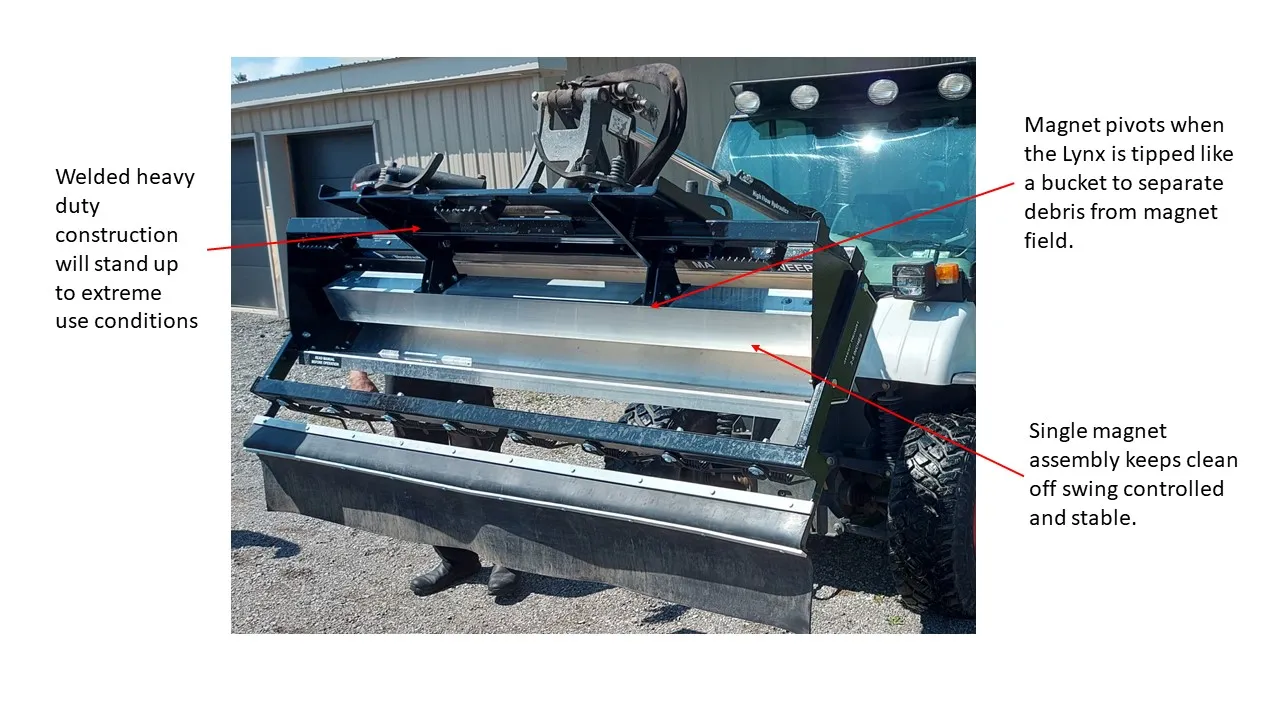
Lynx Swing Out Clean Off Magnet Features

A: Welded heavy-duty construction will stand up to extreme use conditions

B: Magnet pivots when the Lynx is tipped like a bucket to separate debris from magnet field

C: Single magnet assembly keeps clean off swing controlled and stable

Operating The Lynx Magnet on a Bobcat MT100

Using the Lynx front mounted magnet on a miniature track loader like a Bobcat MT100 is an easy task that just requires a little bit of feathering the controls to adjust for changes in terrain. The Lynx has a strong 3/16” aluminum debris pans which can stand up to ground strikes and won’t lose collected debris thanks to the wrap around function, but it is still best to avoid ground strikes where possible. Check out this video to see what is involved in running the Lynx magnet on a mini track loader.

Okay, so we just put on the debris digging rakes for this Lynx magnetic sweeper. This is our newest skid steer model. It is the new smallest member of the skid steer line. Four-and-a-half-inch aluminum pan rather than stainless steel, so that is not only to just save weight, but it also saves money.


So, we got our debris digging rake attachment on here and we’re at a local landfill. This landfill is the construction debris or construction garbage section of the landfill. So, we’ve just been making some passes around here. I just did a little pass just up and down there—you might be able to see the marks from the debris digging rake. And, yeah, I did that—I didn’t have the camera running, so we’re doing it again.


So we’re back out here and, uh, you can see where I’ve been because obviously there’s a debris digging rake, and that’s one of the big bonuses of this thing: the debris digging rake lets you know where you’ve been so I’m not running over the same spot.


So with this magnet, like I said, it’s got an aluminum housing on it and it’s got an aluminum debris pan. Now, that is a little less sturdy than maybe the stainless steel one, but it’s a lighter duty magnet. It’s meant for maybe farmers, construction guys, roofers, anybody who’s got, like, a big kind of industrial job they need to do but don’t have such a severe problem. If they need, like, the beer cap—so I better even pick up this flip-flop. Another thing with the debris digging rake is it kind of acts like a broom.


So, I will be running through the edge of this. I can see the nail sitting on top of the pile of this shingle pile and it’s just going to kind of push them out of the way. So what that’s going to do for me is hopefully separate the nails from the shingles, and I can see a ton of nails on these shingles, so hopefully no one’s driving over these things. But we’re just gonna pick up a bunch of nails. I can hear them snapping up to the bottom of the magnet here, and I can see them on the back of the magnet because I’ve been hitting the ground with this because I’m not paying attention that much. If you were really feathering the controls, you’d never really hit the ground, but we know that’s not how people operate things.


So we have the wraparound function, which just means that the magnet housing we have in here is fully packed with magnet material. So if you do hit—if and when you do hit—the ground, like I just did there, you’re not going to lose your material you picked up. You’re just gonna—it’s just gonna flip to the back of the magnet and it’s going to be stuck. You’re not going to just push it around.


So we’re going through this construction area now. We’re in the wood section, and obviously if guys are doing framing or trusses or something, they’re using nails, they’re using screws. So it’s a perfect little tool for this kind of thing. If you do this monthly, you maintain a clean property here, and my debris digging rakes are just helping that much more just to get everything up out of the ground and collect by the magnet.


So, this model only weighs about 350 pounds and it’s got an eight-and-a-half-inch pickup height. Most of the nails I’m collecting here seem to only be about two inches or less, and this magnet is designed to pick up nails from, yep, a two-and-a-half-inch nail from up to eight-and-a-half inches.


Yeah, so this thing is fully powder coated—no, not powder coated, it’s painted steel and aluminum, so it’s very impervious to the elements here. So I’m gonna run it through this big puddle, just for fun. And I guess lose my flip-flop I collected, but we’re gonna pull some nails out of the puddle, because why not? It’s got drain holes underneath, so any water that gets collected inside of it will just drain out the back.


So this is a very problematic area to be driving it in, this kind of dump here, because they’re dumping construction debris. And what do you use for construction? You use fasteners. So these guys come in here, they dump their load, they leave—you know, they might pick up a couple nails on their way out, they didn’t intend to. So that’s why a tool like this is essential for landfills and any kind of area where you got construction going on, you got some kind of, basically for anybody needing to just grab metal.


Another issue I’ve heard constantly is horse farmers. They have hay they’re putting in their stalls, and they want to check their hay to make sure there’s no nails in it before they let the horses touch it. So in the past, I’ve recommended them some magnets and they say, “Oh, that’s a bit too much.” Like, here’s a whole pack of nails right here. So this is an option that is fairly affordable for a great tool.


This thing is really a great option for anybody who’s not, like, a you know, a serious construction effort or a serious big company. Anybody can own something like this. You got a skid steer, it’s a good value, that’s cool. You can offer this if you got a service, you got an excavation company, something like that, you got a skid steer—this thing is a great service. You say, “Hey, you guys got a roofing job coming through, I’ll come by after, maybe a couple bucks, we’ll clean it up for you.”


Any roofing contractor—same thing. You want to offer an additional service, like the extra cleaning or something like that, or you just want to clean up after you do a good job, this is going to be a great tool for you. It’s affordable, it’s very strong—I mean, we have a lot of nails stuck to this thing, and I’ve only been out here for, maybe, five minutes, and it’s very easy to use. Like, I’m not doing much here, I’m just kind of pushing the accelerator forward and maybe feathering a little bit depending on the terrain.


So, like I said, aluminum housing. I believe it’s a 68-inch sweeping width—maybe 64, I’m not sure, I forget—but I believe it’s a 68-inch sweeping width. Yeah, it weighs about 350 pounds. You can move it around your shop without having good machinery if you need to, and it’s easy to attach. There’s no hydraulics, there’s nothing to hook up. Everything works off gravity, so just like our Meerkat Sokoke, just like a bucket, you tip it forward and everything dumps off the magnet.


And because there’s no, you know, no hydraulics hookup, if you have an automatic safety-switch skid steer you can just switch tools without leaving the cab.


So I got a bit of a collection here. We found out this thing won’t actually dump into this metal bin here—this machine, we have this little Bobcat, doesn’t have the lift to get up there and tip forward at the same time. So we’re just going to clean it off on the ground here. We got a bit of a pile going, and we’re going to switch machinery, but to see if you can take a look at that collection on the bottom there, check the time stamp in your video. There probably won’t be any cuts on this—we’ve been out for maybe five, six minutes at the most, and look at all the stuff we got.


So we can clean it off. You just tip it forward like you would any bucket—that causes the magnet that’s in the housing there to swing away from the back wall, which releases all the debris from the magnetic field. There you go. Do that a couple times, just to get all the stragglers off.


Now you can see there’s a pink piece there—there we go. So, yeah, the housing on the back is slightly magnetized, but you’re gonna get that. You got a big magnet in there—some of the steel is going to get magnetized on the housing, and in that case, I mean, there’s a couple stragglers left. Who really cares? It’s not going to affect your pickup performance that much.


But, yeah, here’s our new product. It’s the Lynx magnetic sweeper. It’s a great little tool. If you got any skid steer, you could even stand on one like this. Use it—not only does it groom your land with these debris digging rakes, it pulls all kinds of nails out. It’ll save you and your customers a lot of headaches from flat tires.


So it’s like this kind of area—it says “shingles”—that looks to me like “do not drive it.” But if you got a nice magnet like this, you can get in there, you can clean up, and your customers won’t have to worry. What a sign of it says, “This area patrolled by the Lynx.” 

Optional Debris Digging Rake

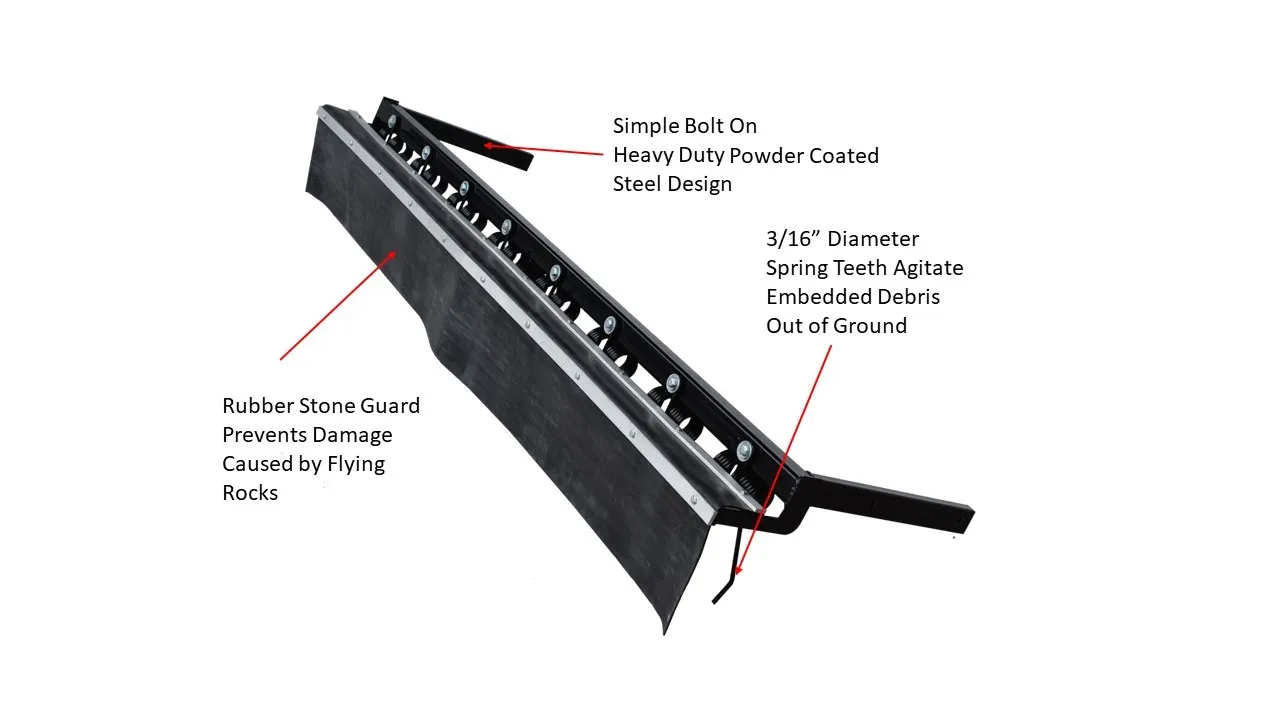
Lynx DDR Construction Details

A: Rubber stone guard prevents damage caused by flying rocks

B: Simple bolt on heavy-duty powder coated steel design

C: 3/16” diameter spring teeth agitate embedded debris out of ground

Groom the Ground and Capture Embedded Debris!

The Lynx Magnetic Sweeper has the option to attach a debris digging rake which utilizes 5/16” spring teeth to loosen any embedded debris up out of the ground so it can get caught by the magnet. The rake accessory is nonadjustable on the Lynx magnet except for using the roll function of your lift arms to adjust digging depth.

The video to the right shows how to attach the debris digging rake to the Lynx magnetic sweeper for Skidsteers and Compact tractors.

Here’s the procedure for installing the optional debris digging rake accessory to the Lynx. So, this model just bolts in—doesn’t have any slide pins or tractor pins like that. You just need two people to line up the holes here, put your bolts through on either side, and then tighten them up.


So, this option is really useful for grooming your land. It’ll kind of flatten everything out. It also kicks up metal out of the ground that might be stuck in from getting run over, and it also helps you to know where you’ve been.

Lynx Skid Steer Magnet Wrap Around Features

A: Bolt-on/Removable aluminum debris tray for easy replacement

B: 0.1875” thick aluminum debris tray to prevent damage to magnet assembly

C: Universal Adaptor Plate for easy positioning; lower the arms all the way and roll the magnet back to be in proper sweeping position

D: Wrap around function holds onto debris in the event of ground strikes

Attaches in Seconds!

The Lynx Front Mounted Magnetic Sweeper uses a universal skid steer adaptor plate that attaches to many types of equipment from skid steers to mini track loaders to compact tractors. As long as your equipment has a normal skid steer mounting plate system it will attach to the Lynx in minutes! See the video below to see the attachment process in action.

Okay, this is our new Lynx magnetic sweeper. This is our new smallest version of a skid steer magnet, so we are testing it today on one of these stand-behind skid steers. This is going to be how to attach the magnet.


So, this has the same skid steer adapter plate that all of our other models have. This one is 19 1/2 inches from the top of the plate to the bottom, so that’s just measurements there for easier positioning. To connect it, you connect it like every other skid steer attachment. It’s just like putting on a bucket or a set of forks or anything else you have with this kind of plate. You just drive into it like you normally do. Once it’s picked up like that, all you have to do is put down the safeties, which we’ll do now, and then you are ready to sweep with the Lynx magnetic sweeper.


Okay, so here is the process for detaching and unloading the Lynx magnetic sweeper from your skid steer. This is just how easy it is to transport the machine. We’re leaving the rail on and everything. All you have to do is just, obviously, set it on your pallet or just directly on the trailer if you want. If you set it directly on the trailer, you have to pick it up either by hand or with a tractor, that sort of thing, but that’s just as easy. It’s just like unloading any other bucket. So we’ll strap that down, and we’re on to the next.

Setting Correct Sweeping Height

Setting the sweeping height on skid steers only requires rolling the sweeper back, and lowering the lift arms to the bottom stops, this will set you near the recommended sweeping height. On a tractor your lift arms may go lower so you will have to adjust to get the correct sweeping height (2 inches to 5 inches).

Front Mounted Magnetic Sweeper with Auto Clean Off
×
Your Cart
CLEAR CART
Cart is empty.
Fill your cart with amazing items
Shop Nowbdfg
    Apply Coupon?
    Sub total $0.00
    Shipping & taxes may be re-calculated at checkout
    Mini cart For WooCommerce

      Copy

      Copy

      Copy

      Copy

      Copy

      Copy

      Copy

      Copy

      Copy

      Copy

      Copy

      Copy